Age 5–6 · Key Stage 1 · Year 1 · England
Year 1 British Curriculum — Complete Guide.
Everything parents need to know about Year 1 in the UK — curriculum, subjects, the Phonics Screening Check, and how Eleven Ace provides expert online tuition for every subject.


Trusted by 500+ families across the UK, UAE & India
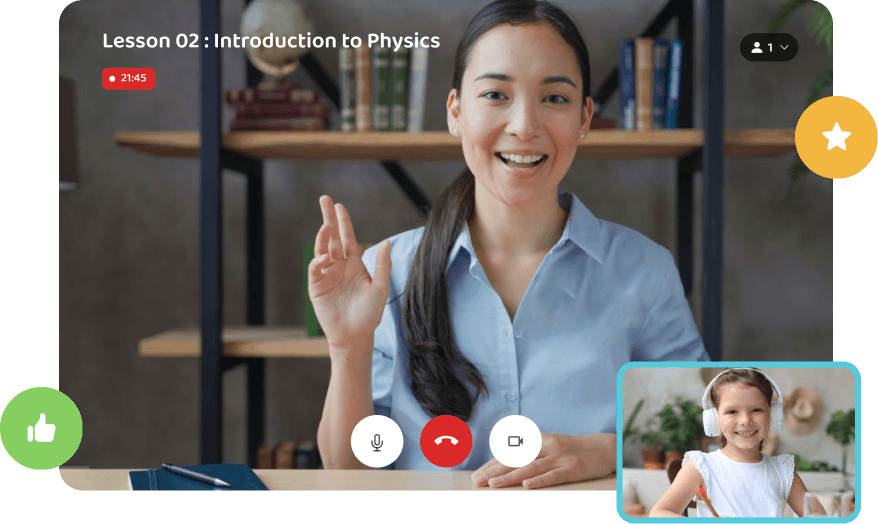
Free demo class
Meet the tutor before you decide
500+
Happy students
20+
Subjects covered
Y1–13
Every year group
3
Countries
Core Subjects
Year 1 National Curriculum — Core Subjects
The three core subjects every Year 1 child studies under the British curriculum. Eleven Ace provides expert 1:1 and batch tuition for all of them.
Phonics, Reading & Writing
- Phonics Phase 5 — learning alternative graphemes and pronunciations
- Blending and segmenting CVC, CCVC and CVCC words
- Reading simple sentences and common exception words (Year 1 list)
- Letter formation — correct size, orientation and starting points
- Capital letters, full stops and finger spaces in sentences
- Sequencing sentences to form short narratives and recounts
- Listening to and retelling stories, poems and nursery rhymes
Number, Shape & Measurement
- Counting to 100 forwards and backwards from any number
- Reading and writing numbers to 20 in numerals and words
- Number bonds to 10 and 20 — addition and subtraction facts
- Add and subtract one-digit and two-digit numbers to 20
- Recognise and name common 2D shapes (circle, triangle, square, rectangle)
- Recognise and name common 3D shapes (cube, cuboid, sphere, cylinder)
- Tell the time to the hour and half past; recognise coins and notes
Plants, Animals & Materials
- Identify and name common plants, including garden and wild plants
- Identify the basic parts of plants — roots, stem, leaves, flowers
- Identify and classify common animals — fish, birds, mammals, reptiles, amphibians
- Name and describe body parts — head, arms, legs, elbows, knees
- Distinguish between everyday materials — wood, plastic, metal, glass, fabric
- Observe and describe seasonal changes throughout the year
- Use senses to explore and describe the world around them
Foundation Subjects
Foundation Subjects — Full Year 1 Curriculum
Beyond the core three, Year 1 children study a broad range of foundation subjects under the British curriculum. Eleven Ace tutors cover these too — from History to Computing.
Changes within living memory — toys, transport, homes. Significant historical events, individuals and places in their own locality. Sequencing events on a timeline.
Name and locate the four countries and capital cities of the UK. Use simple compass directions and locational language. Identify seasonal and daily weather patterns.
Not compulsory at KS1 but many schools introduce basic French or Spanish — simple greetings, colours, numbers to 10 and songs.
Understanding what algorithms are. Using Bee-Bots and simple floor robots. Basic mouse and keyboard skills. Online safety — keeping personal information private.
Drawing, painting, printing, collage and sculpture. Exploring colour, pattern, texture and shape. Learning about the work of famous artists.
Designing and making simple products — puppets, moving pictures, healthy snacks. Using tools safely. Evaluating their own and others' designs.
Singing songs, chants and rhymes. Playing untuned instruments. Listening to and responding to different styles of music. Identifying high/low, fast/slow sounds.
Friendships, sharing, taking turns. Understanding feelings and emotions. Keeping safe. Learning about different celebrations, festivals and religious stories.
Fundamental movement skills — running, jumping, throwing, catching. Simple team games. Dance and gymnastics with basic balances and sequences.
Eleven Ace Tuition
Expert Online Tuition for Every Year 1 Subject
Whether your child needs support with phonics, early reading, maths or any other subject — Eleven Ace offers two flexible options across the entire UK.
1:1 Personalised Online Tuition
- Dedicated tutor matched to your child's learning needs and pace
- All Year 1 subjects — Phonics, Reading, Writing, Maths, Science and more
- Flexible scheduling — evenings, weekends and school holidays
- Phonics specialist support — Phase 5 decoding and blending practice
- Regular progress reports shared with parents every month
- Phonics Screening Check prep — targeted practice with real and pseudo words
- Personalised pace — your child learns at their own speed, not a group's
4-Student Batch Online Tuition
- Maximum 4 students per batch — every child gets individual attention
- Collaborative learning with peer motivation and fun group activities
- More affordable than 1:1 while maintaining high-quality teaching
- Grouped by ability level for the best learning experience
- All Year 1 curriculum subjects covered — Phonics, Maths, Science and more
- Weekly homework and phonics practice activities included
- Same expert tutors as 1:1 — just a different learning format
Start Your Child's Year 1 Journey Today.
1:1 tuition · 4-student batches · All subjects · Phonics support · Across the UK
Book Free Year 1 Demo ClassAssessments
Assessments & Tests in Year 1
Year 1 has one key statutory assessment — the Phonics Screening Check in June. Here's what your child will encounter and how Eleven Ace helps them prepare.
How Eleven Ace Helps
Our tutors prepare students for the Phonics Screening Check with targeted decoding practice, blending drills and pseudo-word exercises. We also support teacher assessments and build strong reading foundations from the start.
What Year 1 Does Have
- Phonics Screening Check — statutory national check taken in June
- Teacher assessments — ongoing tracking of reading, writing and maths progress
- School internal assessments — half-termly or termly reviews depending on the school
What Year 1 Does NOT Have
- No KS1 SATs — SATs are Year 2 only
- No Multiplication Tables Check — MTC is Year 4 only
- No KS2 SATs — those are Year 6 only
Maths
Year 1 Maths — Full Topic List
Every Maths topic your Year 1 child covers under the British curriculum. Eleven Ace tutors work through each of these systematically in 1:1 and batch sessions.
- Count to and across 100 forwards and backwards
- Read and write numbers from 1 to 20 in numerals and words
- Identify one more and one less than a given number
- Count in multiples of 2, 5 and 10
- Use number lines to order and compare numbers
- Recognise odd and even numbers
- Number bonds to 10 and to 20
- Add and subtract one-digit and two-digit numbers to 20
- Read, write and interpret +, − and = signs
- Solve one-step addition and subtraction word problems
- Find missing numbers — e.g. 7 = ? − 9
- Use objects, pictures and number lines to solve problems
- Recognise and name 2D shapes — circles, triangles, rectangles, squares
- Recognise and name 3D shapes — cubes, cuboids, spheres, cylinders, cones
- Describe position and movement — whole, half, quarter turns
- Compare, describe and measure lengths and heights
- Measure and compare weight and capacity
- Tell time to the hour and half past the hour
- Recognise and find half and quarter of objects, shapes and quantities
- Recognise and know the value of different coins and notes
English
Year 1 English — Full Topic List
Every English topic covered in Year 1 under the British curriculum. Eleven Ace sessions build phonics confidence, early reading fluency and writing foundations.
- Apply Phase 5 phonics knowledge to decode words
- Read common exception words from the Year 1 word list
- Read aloud accurately — books matched to phonics ability
- Understand what they read by checking it makes sense
- Link reading to own experiences and knowledge
- Retell familiar stories and predict what might happen next
- Listen to and discuss a wide range of poems, stories and non-fiction
- Sit correctly and hold a pencil with the correct grip
- Form lowercase letters correctly — starting and finishing in the right place
- Form capital letters and digits 0–9
- Use finger spaces between words
- Write sentences with capital letters, full stops and question marks
- Sequence sentences to form short narratives
- Write labels, lists, captions and simple recounts
- Listen and respond appropriately to adults and peers
- Ask relevant questions to extend understanding
- Take turns in conversations and group discussions
- Retell stories and recount experiences in the correct order
- Speak audibly and fluently with increasing confidence
- Participate in role play and drama activities
- Learn and recite simple poems and rhymes by heart
Phonics Focus
Phonics & Early Reading — The Foundation of Year 1
Phonics is the single most important skill your child develops in Year 1. It is the key to unlocking independent reading and is assessed through the statutory Phonics Screening Check in June.
- Systematic Synthetic Phonics (SSP) — the method used in all English primary schools
- Children learn grapheme-phoneme correspondences — linking letters to sounds
- Year 1 children work through Phase 5 — learning alternative spellings and pronunciations
- Blending — pushing sounds together to read words (c-a-t → cat)
- Segmenting — breaking words into sounds to spell them (ship → sh-i-p)
- Schools use approved programmes — Jolly Phonics, Read Write Inc, Letters and Sounds, Little Wandle
- Statutory national check — taken by all Year 1 children in June
- Contains 40 words — a mix of real words and pseudo (nonsense) words
- Pseudo words test pure decoding — children cannot guess from context
- Pass mark is approximately 32 out of 40 (set each year by the DfE)
- Children who do not reach the threshold resit in Year 2
- Eleven Ace provides targeted practice with both real and pseudo words to build confidence
Phonics Phases Overview
Year 1 children should be working through Phase 5 by the end of the year.
| Phase | Typical Age / Year | What Children Learn | Examples |
|---|---|---|---|
| Phase 1 | Nursery / Pre-school | Environmental sounds, rhythm, rhyme, oral blending | Clapping syllables, listening games |
| Phase 2 | Reception (Autumn) | 19 letters and their sounds, blending for reading | s, a, t, p, i, n → sat, pin, tap |
| Phase 3 | Reception (Spring) | Remaining letters, digraphs and trigraphs | ch, sh, th, ai, ee, igh, oa |
| Phase 4 | Reception (Summer) | Blending and segmenting longer words, consonant clusters | CCVC: frog, trip; CVCC: milk, jump |
| Phase 5 | Year 1 (all year) | Alternative graphemes, split digraphs, pronunciation choices | ay, ou, ie, ea, oy, ir; a-e, i-e, o-e |
Transition
EYFS to KS1 — How Year 1 Is Different from Reception
Year 1 marks a significant shift from the play-based learning of Reception to a more structured curriculum. Understanding this change helps parents support their child through the transition.
Reception uses continuous provision and child-initiated play. Year 1 introduces longer, teacher-led lessons with a focus on core subjects — English, Maths and Science.
Daily phonics sessions become more structured in Year 1. Children move into Phase 5 and are expected to apply their phonics knowledge independently when reading and writing.
In Reception, mark-making is encouraged. In Year 1, children are taught to form lowercase and capital letters correctly with proper pencil grip, sizing and orientation.
Most schools introduce simple homework in Year 1 — reading every night, weekly spellings and sometimes a short Maths task. This builds routine and home-school connections.
Children spend more time at desks and less time in free-flow play areas. Many schools ease this transition by keeping some play-based elements in Autumn Term of Year 1.
Read with your child every day. Practise letter formation at home. Be patient — adjustment takes time. Eleven Ace tutors make the transition smoother with gentle, structured sessions.
Parent Guide
What to Do in Year 1
A term-by-term action plan for parents navigating Year 1. Follow this timeline to support your child's first year of formal schooling.
- Establish a daily reading routine — 10–15 minutes every day makes a huge difference
- Practise letter formation — use lined paper and focus on correct starting points
- Support the transition from Reception — be patient as your child adjusts to longer lessons
- Learn phonics sounds together — ask the school which programme they use
- Book a free demo with Eleven Ace — start tuition while the year is fresh
- Practise number bonds to 10 and 20 — use games, flashcards and real-life situations
- Read common exception words — practise the Year 1 word list regularly
- Prepare for the Phonics Screening Check — practise decoding real and pseudo words
- Encourage writing at home — cards, labels, lists and short sentences
- Review progress with your Eleven Ace tutor — adjust focus ahead of the Phonics Check
Why Year 1 Parents Choose Eleven Ace
- All subjects in one place — no juggling multiple tutors or platforms
- Phonics & reading specialists — targeted Phonics Screening Check preparation
- Flexible 1:1 or batch options — choose what works for your family
- Progress visibility — monthly reports so you always know where your child stands
- UK-wide coverage — expert tutors available wherever you are
- Free demo class — try before you commit, no obligation
FAQ
Frequently Asked Questions — Year 1
Everything parents ask about Year 1 in the British curriculum, answered clearly.
Yes — the Phonics Screening Check is a statutory national check taken by all Year 1 children in June. It tests whether your child can decode words using phonics. It contains 40 words (a mix of real and pseudo words) and the pass mark is approximately 32 out of 40.
Wellbeing
Child Wellbeing — Supporting Your Year 1 Child
Year 1 is a big adjustment for young children. Supporting their emotional wellbeing is just as important as academic progress.
Some children find the transition from Reception challenging. Longer lessons, new expectations and less play time can feel overwhelming. Reassure your child that it is normal to find things hard at first.
Year 1 homework should be short and manageable — reading every night plus a simple weekly task. If your child is becoming stressed about homework, speak to their teacher. Eleven Ace sessions are designed to be fun and engaging, not pressured.
Children aged 5–6 still need plenty of unstructured play. Play develops creativity, social skills, problem-solving and emotional resilience. Do not fill every moment with structured learning.
Celebrate small wins — reading a new word, writing their name neatly, counting to 20. Confidence in Year 1 builds the foundation for a positive attitude towards learning for years to come.
Give Your Child the Best Start in Year 1.
1:1 Tuition · 4-Student Batches · All Subjects · Phonics Support · Across the UK
English · Maths · Science · Phonics · Reading · Writing · History · Geography · Computing
Book Free Year 1 Demo ClassWho teaches it
Real tutors, teaching live — never pre-recorded.
Every Year 1 session is with a named subject specialist, matched to your child on year group, current ability and the goals you set. Sit a free demo lesson before you decide.