Age 14–15 · Key Stage 4 · Year 10 · England
Year 10 British Curriculum — Complete Guide.
Everything parents need to know about Year 10 in the UK — GCSE courses, option subjects, assessments, coursework, and how Eleven Ace provides expert online tuition for every GCSE subject.


Trusted by 500+ families across the UK, UAE & India
Free demo class
Meet the tutor before you decide
500+
Happy students
20+
Subjects covered
Y1–13
Every year group
3
Countries

Core Subjects
Year 10 GCSE — Core Subjects
The three compulsory core subjects every Year 10 student studies at GCSE level. Eleven Ace provides expert 1:1 and batch tuition for all of them across AQA, Edexcel and OCR exam boards.
Two GCSEs in English
- Unseen fiction and non-fiction reading comprehension
- 19th-century novel study (e.g. A Christmas Carol, Jekyll & Hyde)
- Modern drama and prose texts (An Inspector Calls, Blood Brothers)
- Poetry anthology — 15 poems compared and analysed
- Creative writing — narrative and descriptive tasks
- Transactional writing — speeches, articles, letters
- Exam boards: AQA, Edexcel, OCR, WJEC, Eduqas
Higher & Foundation Tiers
- Quadratic equations — factorising, formula, completing the square
- Surds, indices and standard form
- Pythagoras' theorem and trigonometry (SOH CAH TOA)
- Probability — tree diagrams, Venn diagrams, conditional
- Histograms, cumulative frequency, box plots
- Algebraic fractions and simultaneous equations
- Higher tier: grades 4–9 · Foundation tier: grades 1–5
Combined or Triple Science
- Combined Science — two GCSEs covering Biology, Chemistry, Physics
- Triple Science — three separate GCSEs (Biology, Chemistry, Physics)
- Biology: cell biology, organisation, infection, bioenergetics
- Chemistry: atomic structure, bonding, quantitative chemistry, chemical changes
- Physics: energy, electricity, particle model, atomic structure
- Required practicals — 21 for Triple, 16 for Combined
- Exam boards: AQA, Edexcel, OCR
Option Subjects
GCSE Option Subjects — Popular Year 10 Choices
Beyond the core three, Year 10 students study 3–4 option subjects chosen in Year 9. Many schools follow the EBacc pathway. Eleven Ace tutors cover every popular GCSE option.
Medicine through time, Elizabethan England, Weimar & Nazi Germany, Cold War, or Conflict & Tension. Source analysis, extended writing, and chronological argument.
Natural hazards, ecosystems, urban issues, resource management, rivers, coasts. Fieldwork investigation required (worth ~15% of grade). AQA, Edexcel, OCR.
Listening, speaking, reading and writing across themes: identity, local area, travel, global issues. Part of the EBacc. AQA, Edexcel, Eduqas exam boards.
Algorithms, programming (Python), data representation, networks, cyber security. NEA programming project begins in Year 10 for some boards.
Enterprise, marketing, finance, HR, operations. Two exam papers. Popular for students interested in commerce, entrepreneurship or economics.
Portfolio coursework (60%) and externally set assignment (40%). Drawing, painting, printmaking, sculpture, photography. NEA portfolio built throughout Year 10.
Devising theatre (40%), performance of a scripted text (20%), written exam (40%). Exploration of practitioners: Brecht, Stanislavski, Artaud.
Performance, composition and listening/appraising. Set works across four areas of study. Coursework performance and composition built from Year 10.
GCSE PE includes practical and theory. Sociology and Psychology are popular options. Religious Education covers philosophy, ethics and beliefs.
Eleven Ace Tuition
GCSE Specialist Tuition for Every Year 10 Subject
Whether your child needs help with GCSE Maths, English, Science or any option subject — Eleven Ace offers two flexible formats with tutors who know each exam board inside out.
1:1 Personalised GCSE Tuition
- GCSE specialist tutor matched to your child's exam board and tier
- All GCSE subjects — English, Maths, Science, Humanities, MFL and more
- Flexible scheduling — evenings, weekends and school holidays
- Diagnostic assessment to identify gaps and target weak topics from Day 1
- Regular progress reports shared with parents every month
- Exam technique coaching — mark schemes, command words, timing strategies
- Personalised pace — your child learns at their own speed, not a group's
4-Student Batch GCSE Tuition
- Maximum 4 students per batch — every student gets individual attention
- Collaborative learning with peer motivation and healthy competition
- More affordable than 1:1 while maintaining high-quality GCSE teaching
- Grouped by exam board and tier for targeted, relevant sessions
- All GCSE subjects covered — English, Maths, Science, Humanities and more
- Weekly homework and past paper practice included in every batch
- Same expert GCSE tutors as 1:1 — just a different learning format
Start Your Child's GCSE Journey on the Right Foot.
1:1 tuition · 4-student batches · All GCSE subjects · Every exam board · Across the UK
Book Free Year 10 Demo ClassAssessments
Assessments & Tests in Year 10
Year 10 has no statutory national exams — those are in Year 11. However, schools use internal assessments, mock exams and coursework to track progress and predict grades. Here is what your child will encounter.
How Eleven Ace Helps
Our GCSE specialist tutors prepare students for internal assessments and mock exams using past papers, mark schemes and examiner reports. We also support NEA coursework for Art, DT, Computing and other subjects.
What Year 10 Does NOT Have
- No final GCSE exams — all statutory exams are in Year 11 (May/June)
- No external exam results — predicted grades are based on internal data
- No KS3 SATs — these were abolished in 2008
What Year 10 Does Have
- Mock exams — some schools run formal mocks in spring or summer of Year 10
- Controlled assessments / NEA — coursework for Art, DT, Computer Science, Music, Drama, PE
- Teacher assessments & tracking — regular topic tests, end-of-unit assessments, predicted grades
- Speaking endorsement prep — English Language and MFL speaking assessments begin preparation
Maths
Year 10 GCSE Maths — Full Topic List
Every Maths topic covered in Year 10 GCSE. Eleven Ace tutors work through each topic systematically, tailored to your child's exam board (AQA, Edexcel, OCR) and tier (Higher or Foundation).
- Surds — simplifying, rationalising the denominator (Higher)
- Standard form — calculations with very large and very small numbers
- Indices and index laws — negative and fractional indices (Higher)
- Quadratic equations — factorising, quadratic formula, completing the square
- Simultaneous equations — linear and quadratic (Higher)
- Algebraic fractions — simplifying, adding, subtracting, multiplying
- Inequalities — solving, graphing on number lines and regions
- Sequences — nth term of linear and quadratic sequences
- Direct and inverse proportion
- Pythagoras' theorem — 2D and 3D problems
- Trigonometry — SOH CAH TOA, sine rule, cosine rule (Higher)
- Circle theorems (Higher) — angles, tangents, chords
- Similarity and congruence — proofs and scale factors
- Vectors — addition, subtraction, scalar multiplication (Higher)
- Transformations — rotation, reflection, enlargement, translation
- Volume and surface area of cones, spheres, pyramids
- Bearings, loci, and constructions
- Area of non-right-angled triangles using ½ab sin C (Higher)
- Histograms — frequency density, unequal class widths
- Cumulative frequency diagrams and box plots
- Scatter graphs — correlation, lines of best fit, interpolation
- Averages from grouped frequency tables
- Probability — tree diagrams, Venn diagrams, sample spaces
- Conditional probability and independent events (Higher)
- Relative frequency and expected outcomes
- Comparing data sets using statistical measures
English
Year 10 GCSE English — Full Topic List
Every English topic covered in Year 10 across both English Language and English Literature GCSEs. Eleven Ace tutors build analytical writing, exam technique, and textual knowledge.
- Shakespeare play — Macbeth, Romeo & Juliet, or The Tempest
- 19th-century novel — A Christmas Carol, Jekyll & Hyde, Frankenstein, or Pride & Prejudice
- Modern drama/prose — An Inspector Calls, Blood Brothers, Lord of the Flies, Animal Farm
- Poetry anthology — Power & Conflict or Love & Relationships (15 poems)
- Unseen poetry — single poem analysis and comparison
- Analysis using PEEL paragraphs — Point, Evidence, Explanation, Link
- Context — social, historical and cultural factors in every text
- Paper 1 — explorations in creative reading (fiction extract) and writing
- Paper 2 — writers' viewpoints and perspectives (non-fiction pair)
- Creative writing — narrative and descriptive tasks under timed conditions
- Transactional writing — letters, articles, speeches, reviews, reports
- Language analysis — word-level, sentence-level, structural features
- Evaluation questions — agree/disagree with critical statement
- Exam technique — timing, command words, mark allocation
- Quotation selection and embedding in analytical paragraphs
- Sophisticated vocabulary and varied sentence structures
- Spelling, punctuation and grammar accuracy (SPaG marks)
- Spoken language endorsement — presentation and Q&A (separate grade)
- Comparing writers' methods across two texts
GCSE Explained
How GCSEs Work — What Parents Must Know
GCSEs were reformed in 2015–2019 with a new 9–1 grading system replacing A*–G. All exams are now linear — meaning everything is examined at the end of Year 11. Understanding the structure helps parents support their child effectively.
- Grade 9 — above the old A* (top ~5% of students)
- Grade 7 — equivalent to the old A grade
- Grade 4 — standard pass (equivalent to old C)
- Grade 5 — strong pass (used by many sixth forms as entry requirement)
- Grade 1 — lowest passing grade (equivalent to old G)
- U — ungraded / unclassified (fail)
- Linear assessment — all exams sat at end of Year 11 (May/June)
- No modular exams — the old system of sitting units has been removed
- AQA — most popular board (largest market share in England)
- Edexcel (Pearson) — widely used across England and internationally
- OCR — popular for Computer Science, Sciences, English
- WJEC/Eduqas — used in Wales and some English schools
- Higher tier — grades 4–9 available; harder questions, broader content
- Foundation tier — grades 1–5 available; more accessible questions
- Tier decision usually made by spring of Year 10 or autumn of Year 11
- Some schools enter students for both tiers to maximise opportunities
- A grade 5 on Foundation is possible but requires near-perfect scores
- Combined Science — worth 2 GCSEs, covers all three sciences at reduced depth
- Triple Science — 3 separate GCSEs (Biology, Chemistry, Physics) at full depth
- Triple requires more curriculum time and is offered by most but not all schools
- Triple recommended for students planning A-Level sciences or medicine
- Combined grades are given as a pair (e.g. 7-7 or 6-5)
GCSE Grading: New 9–1 vs Old A*–G
Understanding the equivalences helps parents interpret predicted grades and targets.
| New Grade (9–1) | Old Grade (A*–G) | Description | Significance |
|---|---|---|---|
| 9 | Above A* | Exceptional performance | Top ~5% nationally |
| 8 | A* | Outstanding | Top ~10% nationally |
| 7 | A | Excellent | Strong sixth form entry |
| 6 | High B | Very good | Competitive sixth form entry |
| 5 | Low B / High C | Strong pass | Many sixth form entry requirements |
| 4 | C | Standard pass | Government benchmark; basic entry requirement |
| 3 | D | Below standard pass | May require resit in English/Maths |
| 2 | E / F | Below expectations | Limited progression options |
| 1 | G | Minimum pass | Lowest graded result |
| U | U | Ungraded | No grade awarded |
Parent Guide
GCSE Revision Strategies — What Parents Should Know
A practical guide for parents supporting their Year 10 child through the first year of GCSEs. Study habits, time management and revision techniques that actually work.
- Create a revision timetable early — don't wait until Year 11 to build study habits
- Consistent daily study — 45–60 minutes of focused revision after homework
- Pomodoro technique — 25-minute focused blocks with 5-minute breaks
- Reduce screen time — phones and social media are the biggest distractors
- Quiet study space — dedicated area free from noise and interruptions
- Active recall — testing yourself is far more effective than re-reading notes
- Spaced repetition — revisit topics at increasing intervals (day 1, 3, 7, 14, 30)
- Past papers — practise real exam questions under timed conditions
- Flashcards — physical or digital (Anki, Quizlet) for key facts and formulae
- Mind maps and Cornell notes — organise information visually for better retention
Why Year 10 Parents Choose Eleven Ace
- All GCSE subjects in one place — no juggling multiple tutors or platforms
- Exam board expertise — AQA, Edexcel, OCR, WJEC tutors who know the specifications
- Flexible 1:1 or batch options — choose what works for your family and budget
- Progress visibility — monthly reports so you always know where your child stands
- UK-wide coverage — expert GCSE tutors available wherever you are
- Free demo class — try before you commit, no obligation
FAQ
Frequently Asked Questions — Year 10
Everything parents ask about Year 10, GCSEs, grading and revision — answered clearly.
All students must take English Language, English Literature, Maths and Science (Combined or Triple). Most schools also require a humanities subject and/or an MFL as part of the EBacc. Beyond these, students choose 2–4 option subjects.
Wellbeing
Child Wellbeing — Managing GCSE Pressure
Year 10 marks the beginning of high-stakes academic pressure. Supporting your child's mental health alongside their studies is essential for sustained success.
Sleep disruption, withdrawal from friends, loss of motivation, irritability, avoidance of schoolwork, physical complaints before tests. If persistent, speak to your child's school or GP.
GCSEs are important but should not dominate every waking hour. Encourage daily exercise, hobbies and social time. A well-rested, balanced teenager performs better than an exhausted one. Eleven Ace sessions are designed to be focused and efficient — not marathon cramming.
One in six teenagers experiences mental health difficulties. Schools have pastoral teams and counsellors. External support is available from Young Minds, Childline (0800 1111) and the NHS. Seeking help is a strength, not a weakness.
GCSEs open doors, but they are not the only path. Encourage effort over perfection. Celebrate progress, not just results. Remind your child that predicted grades can improve significantly with consistent work between now and Year 11.
Book Free Year 10 Demo Class.
1:1 Tuition · 4-Student Batches · All GCSE Subjects · Every Exam Board · Across the UK
English · Maths · Science · History · Geography · MFL · Computer Science · Business · Art · Drama · Music · PE
Book Free Year 10 Demo ClassWho teaches it
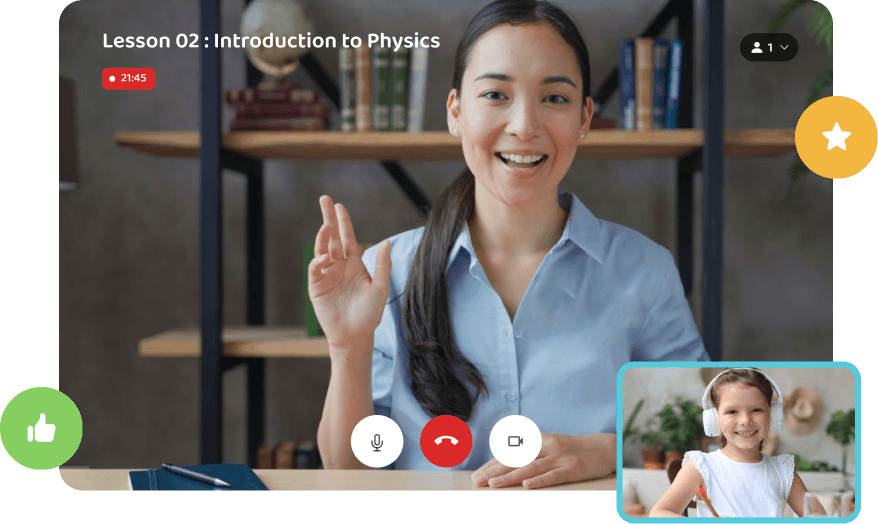
Real tutors, teaching live — never pre-recorded.
Every Year 10 session is with a named subject specialist, matched to your child on year group, current ability and the goals you set. Sit a free demo lesson before you decide.