Age 6–7 · Key Stage 1 · Year 2 · England
Year 2 British Curriculum — Complete Guide.
Everything parents need to know about Year 2 in the UK — curriculum, subjects, KS1 SATs, the Phonics resit, and how Eleven Ace provides expert online tuition for every subject.


Trusted by 500+ families across the UK, UAE & India
Free demo class
Meet the tutor before you decide
500+
Happy students
20+
Subjects covered
Y1–13
Every year group
3
Countries

Core Subjects
Year 2 National Curriculum — Core Subjects
The three core subjects every Year 2 child studies under the British curriculum. Eleven Ace provides expert 1:1 and batch tuition for all of them.
Reading, Writing & SPaG
- Phase 6 phonics — spelling patterns, suffixes, prefixes
- Reading fluency and expression — decoding with increasing speed
- Common exception words — Year 2 word list (approx. 60 words)
- Writing in different forms — stories, instructions, recounts, letters, poems
- Expanded noun phrases, conjunctions (and, but, or, because, when, if)
- Past and present tense, commas in lists, apostrophes for contraction
- Handwriting — lowercase letters joining correctly
Number, Measurement & Geometry
- Place value — read, write and compare numbers to 100
- Addition and subtraction facts to 20 (fluent recall)
- Add and subtract two-digit numbers and ones, tens
- Multiplication and division — 2×, 5× and 10× tables
- Fractions — find ½, ⅓, ¼, ²⁄₄ and ¾ of shapes and quantities
- Measure length (cm/m), mass (g/kg), capacity (ml/l) and temperature
- Tell time to 5 minutes; know minutes in an hour and hours in a day
Living Things, Materials & Habitats
- Living things and their habitats — micro-habitats, food chains
- Identify things that are living, dead and never been alive
- Plants — observe and describe growth, seeds and bulbs, water and light
- Animals including humans — offspring, basic needs, healthy eating, exercise, hygiene
- Uses of everyday materials — suitability for purpose, compare properties
- Investigate how shapes of materials can be changed — squash, bend, twist, stretch
- Ask simple scientific questions and carry out simple tests
Foundation Subjects
Foundation Subjects — Full Year 2 Curriculum
Beyond the core three, Year 2 children study a broad range of foundation subjects under the British curriculum. Eleven Ace tutors cover these too — from History to Computing.
Events beyond living memory — the Great Fire of London, first aeroplane flight. Lives of significant individuals — Florence Nightingale, Mary Seacole, Neil Armstrong. Local history study.
Compare a UK locality with a non-European country. Name and locate the world's continents and oceans. Use aerial photographs, maps and compass directions. Fieldwork in the local area.
Not compulsory at KS1 but many schools continue basic French or Spanish — greetings, colours, numbers, days of the week, simple classroom instructions and songs.
Create and debug simple programs. Use logical reasoning to predict outcomes. Understand common uses of technology. Online safety — recognising risks and reporting concerns.
Develop techniques in drawing, painting, sculpture, printing and textiles. Use a range of materials creatively. Learn about great artists, architects and designers.
Design, make and evaluate products — moving vehicles, puppets with mechanisms, simple food recipes. Use tools safely and understand structures and mechanisms.
Sing songs with increasing control. Play tuned and untuned instruments. Compose simple pieces. Listen to and discuss music from different traditions and periods.
Healthy relationships, bullying awareness, money and saving. Understanding emotions and managing feelings. Learning about different religions, beliefs and moral values.
Master basic movements — running, jumping, throwing, catching. Develop balance, agility and coordination. Participate in team games, gymnastics, dance and athletics.
Eleven Ace Tuition
Expert Online Tuition for Every Year 2 Subject
Whether your child needs support with KS1 SATs preparation, phonics, reading or any other subject — Eleven Ace offers two flexible options across the entire UK.
1:1 Personalised Online Tuition
- Dedicated tutor matched to your child's learning needs and pace
- All Year 2 subjects — Reading, Writing, Maths, Science, SPaG and more
- Flexible scheduling — evenings, weekends and school holidays
- KS1 SATs preparation — targeted practice with past papers and mock tests
- Regular progress reports shared with parents every month
- Phonics resit support — for children who need to retake the Phonics Check
- Personalised pace — your child learns at their own speed, not a group's
4-Student Batch Online Tuition
- Maximum 4 students per batch — every child gets individual attention
- Collaborative learning with peer motivation and healthy competition
- More affordable than 1:1 while maintaining high-quality teaching
- Grouped by ability level for the best learning experience
- All Year 2 curriculum subjects covered — Reading, Maths, SPaG and more
- Weekly homework and SATs-style practice included
- Same expert tutors as 1:1 — just a different learning format
Start Your Child's Year 2 Journey Today.
1:1 tuition · 4-student batches · All subjects · KS1 SATs prep · Across the UK
Book Free Year 2 Demo ClassAssessments
Assessments & Tests in Year 2
Year 2 is an important assessment year. Children take KS1 SATs in May, and those who did not pass the Phonics Screening Check in Year 1 resit it in June. Here's everything you need to know.
How Eleven Ace Helps
Our tutors prepare students for KS1 SATs with targeted practice papers, mock tests and gap analysis. We also provide Phonics resit support and help children build confidence across all assessed areas — Reading, Maths and GPS.
What Year 2 Does Have
- KS1 SATs — Reading and Maths papers administered by teachers in May
- GPS paper — Grammar, Punctuation & Spelling (optional but widely used)
- Phonics Screening Check resit — June, for children who did not pass in Year 1
- Teacher assessments — final KS1 judgements in Reading, Writing, Maths and Science
- School internal assessments — half-termly or termly tracking throughout the year
What Year 2 Does NOT Have
- No Multiplication Tables Check — MTC is Year 4 only
- No KS2 SATs — those are Year 6 only
- No 11+ exams — 11+ preparation begins in Year 5
Maths
Year 2 Maths — Full Topic List
Every Maths topic your Year 2 child covers under the British curriculum. Eleven Ace tutors work through each of these systematically in 1:1 and batch sessions.
- Count in steps of 2, 3 and 5 from 0, and in 10s from any number
- Recognise place value of each digit in a two-digit number (tens, ones)
- Compare and order numbers from 0 to 100 using < > and = signs
- Read and write numbers to at least 100 in numerals and words
- Use place value and number facts to solve problems
- Identify, represent and estimate numbers on a number line
- Recall and use addition and subtraction facts to 20 fluently
- Add and subtract numbers using concrete objects, pictorial representations
- Add and subtract a two-digit number and ones, tens, or two two-digit numbers
- Recognise and use the inverse relationship between addition and subtraction
- Recall and use multiplication and division facts for 2, 5 and 10 times tables
- Solve problems involving multiplication and division using arrays and grouping
- Recognise, find, name and write ½, ⅓, ¼, ²⁄₄ and ¾
- Write simple fractions — e.g. ½ of 6 = 3
- Recognise equivalence of ²⁄₄ and ½
- Choose appropriate standard units to estimate and measure length, mass, temperature, capacity
- Tell and write the time to five minutes, including quarter past/to
- Recognise and use £ and p, combine amounts to make a particular value
- Identify and describe properties of 2D and 3D shapes, including sides, vertices, edges and faces
- Order and arrange combinations of shapes, patterns and sequences
English
Year 2 English — Full Topic List
Every English topic covered in Year 2 under the British curriculum. Eleven Ace sessions build reading fluency, writing accuracy and grammar confidence ahead of KS1 SATs.
- Continue to apply phonic knowledge and skills to decode words
- Read accurately by blending — including alternative sounds for graphemes
- Read common exception words from the Year 2 word list
- Read with fluency, expression and understanding
- Discuss and express views about fiction, non-fiction and poetry
- Answer questions and make inferences based on what is said and done
- Predict what might happen based on what has been read so far
- Write narratives about personal experiences and fictional events
- Write for different purposes — stories, instructions, recounts, letters, poems
- Plan and discuss what to write about, then review and edit
- Use subordination (when, if, that, because) and coordination (and, but, or)
- Use expanded noun phrases to describe and specify
- Form lowercase letters correctly and begin to join
- Write capital letters and digits of the correct size and orientation
- Use full stops, capital letters, exclamation marks and question marks
- Commas to separate items in a list
- Apostrophes for contracted forms (can't, don't, I'll) and possession (the girl's book)
- Past tense — regular (-ed) and common irregular verbs
- Present tense — progressive form (she is drumming)
- Suffixes: -ment, -ness, -ful, -less, -ly, -er, -est
- Year 2 common exception words and high-frequency spellings
KS1 SATs
KS1 SATs — What Parents Must Know in Year 2
KS1 SATs are taken in May of Year 2. They are teacher-administered and used alongside teacher assessments to determine your child's end-of-KS1 attainment. Eleven Ace provides specialist SATs preparation.
- Statutory national tests administered by class teachers in May of Year 2
- Reading — two papers: Paper 1 (combined reading and answer booklet) and Paper 2 (reading booklet with separate answer booklet)
- Maths — two papers: Paper 1 (Arithmetic, 15 mins) and Paper 2 (Reasoning, 35 mins)
- GPS — Grammar, Punctuation & Spelling paper (optional but used by most schools)
- Results are not published as league tables — used for internal tracking and teacher assessment
- Children are assessed as Working Towards, Expected Standard, or Greater Depth
- Past paper practice — work through real KS1 SATs papers with tutor guidance
- Gap analysis — identify and target weak areas in Reading, Maths and GPS
- Arithmetic drills — build speed and fluency for the 15-minute Paper 1
- Reading comprehension strategies — inference, retrieval, prediction and vocabulary
- Grammar and spelling practice — suffixes, tenses, punctuation rules
- Low-pressure environment — SATs should not be stressful for 6–7 year olds
KS1 SATs Paper Structure
Eleven Ace tutors prepare your child for every paper with targeted practice sessions.
| Subject | Paper | Duration | What It Tests |
|---|---|---|---|
| Reading | Paper 1 | ~30 mins | Combined reading text and questions — retrieval, inference, vocabulary |
| Reading | Paper 2 | ~40 mins | Separate reading booklet with answer booklet — longer texts, deeper comprehension |
| Maths | Paper 1 (Arithmetic) | 15 mins | Number facts, addition, subtraction, multiplication, division |
| Maths | Paper 2 (Reasoning) | 35 mins | Problem solving, measurement, geometry, fractions, statistics |
| GPS | Single paper | ~20 mins | Grammar rules, punctuation, spelling — used alongside teacher assessment |
Transition
KS1 to KS2 — Preparing for Year 3
Year 2 is the final year of KS1. In September, your child moves into Year 3 and Key Stage 2. Understanding what changes helps parents prepare their child for a smooth transition.
KS2 expects more independence. Children write at greater length, read longer texts, and solve multi-step maths problems. The jump from Year 2 to Year 3 is one of the biggest in primary school.
By Year 3, children are expected to use joined handwriting consistently. Year 2 is the year to practise joining letters — children who enter Year 3 still printing often struggle.
Year 2 covers 2×, 5× and 10× tables. In Year 3, children learn 3×, 4× and 8× tables. Strong times table recall from Year 2 is essential for KS2 maths success.
KS2 texts are longer and more complex. Children need to read independently for longer periods. Building reading stamina and comprehension skills in Year 2 pays dividends in Year 3.
Modern Foreign Languages become compulsory at KS2. Schools that introduced French or Spanish in KS1 will build on this; others start from scratch in Year 3.
Use the summer holiday to consolidate Year 2 skills. Practise times tables, read every day, and keep writing. Eleven Ace tutors offer summer sessions to bridge the KS1–KS2 gap.
Parent Guide
What to Do in Year 2
A term-by-term action plan for parents navigating Year 2. Follow this timeline to support your child through KS1 SATs and beyond.
- Continue daily reading — 15–20 minutes every day builds fluency and comprehension
- Practise 2×, 5× and 10× tables — use songs, games and rapid recall activities
- Support spelling at home — practise Year 2 common exception words weekly
- Build writing confidence — encourage writing for purpose (cards, diaries, stories)
- Book a free demo with Eleven Ace — start tuition early for the best SATs preparation
- Begin KS1 SATs practice — work through past papers with your child or tutor
- Focus on reading comprehension — practise inference, retrieval and vocabulary questions
- Strengthen arithmetic — addition and subtraction facts to 20 should be automatic
- Prepare for Phonics resit — if your child resits in June, practise pseudo words
- Review progress with your Eleven Ace tutor — target weak areas before SATs in May
Why Year 2 Parents Choose Eleven Ace
- All subjects in one place — no juggling multiple tutors or platforms
- KS1 SATs specialists — targeted preparation with past papers and mock tests
- Flexible 1:1 or batch options — choose what works for your family
- Progress visibility — monthly reports so you always know where your child stands
- UK-wide coverage — expert tutors available wherever you are
- Free demo class — try before you commit, no obligation
FAQ
Frequently Asked Questions — Year 2
Everything parents ask about Year 2 in the British curriculum, answered clearly.
KS1 SATs are statutory national tests taken by all Year 2 children in May. They include papers in Reading (two papers) and Maths (Arithmetic and Reasoning). Most schools also administer a GPS (Grammar, Punctuation & Spelling) paper. They are administered by classroom teachers, not under formal exam conditions.
Wellbeing
Child Wellbeing — Managing Year 2 Pressure
Year 2 includes KS1 SATs, but children aged 6–7 should not feel exam pressure. Keeping assessment proportionate is essential for healthy development.
KS1 SATs are administered in a normal classroom setting by the class teacher. Most children do not even realise they are taking a test. Parents should avoid talking about SATs as a high-stakes event — keep the focus on learning and having fun.
Short, regular practice is better than last-minute cramming. 15–20 minutes of focused reading or maths per day is enough. Eleven Ace sessions are designed to be engaging and confidence-building, not stressful or pressured.
Children aged 6–7 still need plenty of unstructured play. Play develops creativity, social skills, problem-solving and emotional resilience. Do not fill every moment with revision or structured learning.
Focus on the progress your child has made rather than test results. Celebrate learning milestones — reading a chapter book, writing a story, solving a tricky maths problem. Every child develops at their own pace.
Help Your Child Thrive in Year 2.
1:1 Tuition · 4-Student Batches · All Subjects · KS1 SATs Prep · Across the UK
English · Maths · Science · Reading · Writing · SPaG · History · Geography · Computing
Book Free Year 2 Demo ClassWho teaches it
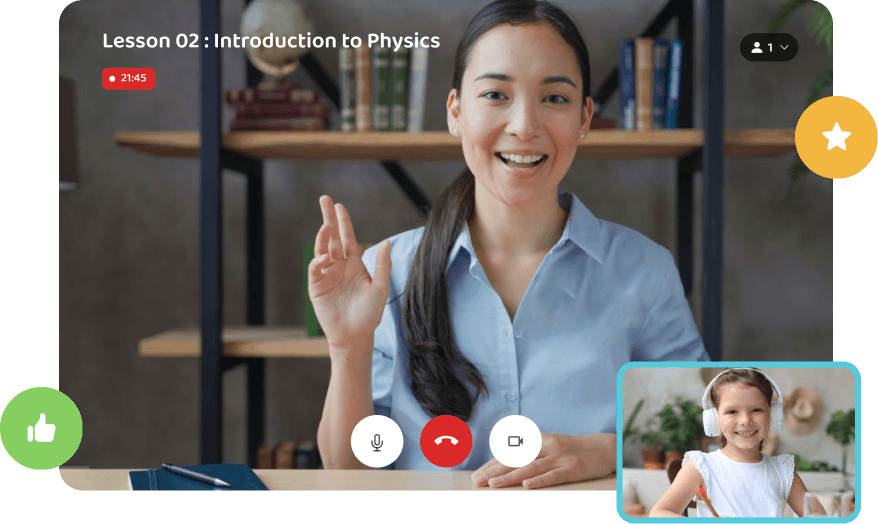
Real tutors, teaching live — never pre-recorded.
Every Year 2 session is with a named subject specialist, matched to your child on year group, current ability and the goals you set. Sit a free demo lesson before you decide.