Age 10-11 · Key Stage 2 · Year 6 · England
Year 6 British Curriculum — Complete Guide.
Everything parents need to know about Year 6 in the UK — the final year of primary school. KS2 SATs, 11+ results, secondary school transition, and how Eleven Ace provides expert online tuition for every subject.


Trusted by 500+ families across the UK, UAE & India
Free demo class
Meet the tutor before you decide
500+
Happy students
20+
Subjects covered
Y1–13
Every year group
3
Countries

Core Subjects
Year 6 National Curriculum — Core Subjects
The three core subjects every Year 6 child studies under the British curriculum. These are tested in the KS2 SATs. Eleven Ace provides expert 1:1 and batch tuition for all of them.
Reading, Writing & GPS
- Introduction to Shakespeare — A Midsummer Night's Dream, The Tempest, Macbeth
- Formal writing — subjunctive mood ("If I were...", "were it not for...")
- Semi-colons, colons and dashes used correctly in writing
- Cohesion across paragraphs — adverbials, pronouns, conjunctions
- Year 5/6 statutory spelling list (100 words) — tested in SATs
- Active and passive voice; synonyms and antonyms in context
- Reading comprehension — inference, deduction, authorial intent, comparison
Algebra, Ratio & Advanced Number
- Algebra — use of variables, simple formulae, linear sequences
- Ratio and proportion — scaling, unequal sharing, recipes
- Long division (4-digit by 2-digit), order of operations (BODMAS)
- Fractions, decimals and percentages — convert, compare, calculate
- Negative numbers — context of temperature, number lines
- Coordinates in all 4 quadrants; reflection and translation
- Mean average; pie charts; interpret and construct line graphs
- Properties of circles (radius, diameter, circumference); 3D nets
Evolution, Light & Electricity
- Evolution and inheritance — fossils, adaptation, natural selection, Darwin
- Light — how it travels, shadows, reflection, refraction, the eye
- Electricity — circuits, voltage, components, symbols, series circuits
- Classification of living things — keys, Linnaeus, kingdoms
- Circulatory system — heart, blood vessels, blood, lungs, nutrients
- Diet, exercise, drugs and lifestyle choices on the body
- Scientific enquiry — fair testing, variables, conclusions from data
Foundation Subjects
Foundation Subjects — Full Year 6 Curriculum
Beyond the core three, Year 6 children study a broad range of foundation subjects under the British curriculum. Eleven Ace tutors cover these too — from History to Computing.
World War II (home front, evacuation, Blitz), post-1066 British history, or a non-European society. Source evaluation, historical argument and chronological understanding.
Trade, globalisation, fair trade, map skills (6-figure grid references), South America or a contrasting locality. Physical and human geography comparison.
Compulsory at KS2. Conversational phrases, short written passages, past tense introduction, cultural knowledge — foundation for secondary MFL study.
Programming (Scratch, Python basics), algorithms, debugging, networks, online safety and digital citizenship. Preparing for secondary school computing.
Sketching, mixed media, sculpture, printmaking, studying significant artists. Developing personal style, technique and critical analysis.
Designing, making and evaluating products — electronics, mechanisms, food technology. Problem-solving, iteration and technical drawing.
Performing, composing, notation reading, ensemble work. End-of-year productions and leavers' performances commonly feature in Year 6.
Transition to secondary school, puberty and growing up, online safety, financial literacy. Comparative religion, moral dilemmas and community responsibility.
Invasion games, athletics, gymnastics, dance, swimming (if not completed earlier). Inter-school competitions and sports day preparation.
Eleven Ace Tuition
Expert Online Tuition for Every Year 6 Subject
Whether your child needs KS2 SATs preparation, 11+ follow-up support, or help with the transition to secondary school — Eleven Ace offers two flexible options across the entire UK.
1:1 Personalised Online Tuition
- Dedicated tutor matched to your child's SATs targets and secondary school goals
- All Year 6 subjects — English, Maths, Science, GPS and more
- KS2 SATs preparation — past papers, timed practice and exam technique
- Diagnostic assessment to identify gaps before SATs season
- Regular progress reports shared with parents every month
- Secondary transition support — bridging work for Year 7 readiness
- Flexible scheduling — evenings, weekends and school holidays
4-Student Batch Online Tuition
- Maximum 4 students per batch — every child gets individual attention
- Collaborative learning with peer motivation and healthy competition
- More affordable than 1:1 while maintaining high-quality teaching
- Grouped by ability level for targeted SATs preparation
- All Year 6 curriculum subjects covered — English, Maths, Science and more
- Weekly homework and SATs mock tests included in every batch
- Same expert tutors as 1:1 — just a different learning format
Start Your Child's Year 6 SATs Journey Today.
1:1 tuition · 4-student batches · All subjects · KS2 SATs prep · Across the UK
Book Free Year 6 Demo ClassAssessments
Assessments & Tests in Year 6
Year 6 is the most heavily assessed year in primary school. The statutory KS2 SATs in May are the headline event, but teacher assessments and 11+ results also play a major role.
How Eleven Ace Helps
Our tutors prepare students for KS2 SATs with past papers, timed practice, and exam technique coaching. We also support children who received 11+ results and need help with secondary transition confidence building.
What Year 6 Has — Statutory Tests
- KS2 SATs — Reading — 1 paper, 1 hour, 50 marks
- KS2 SATs — GPS (Paper 1) — grammar and punctuation, 45 minutes, 50 marks
- KS2 SATs — GPS (Paper 2) — spelling test, approx. 15 minutes, 20 marks
- KS2 SATs — Maths Paper 1 — arithmetic, 30 minutes, 40 marks
- KS2 SATs — Maths Paper 2 — reasoning, 40 minutes, 35 marks
- KS2 SATs — Maths Paper 3 — reasoning, 40 minutes, 35 marks
- 11+ results received — grammar school and independent school offers confirmed
- Teacher assessments — English writing, science (reported to parents and secondary schools)
What Year 6 Does NOT Have
- No GCSE exams — GCSEs are taken in Year 11 (age 15-16)
- No A Level exams — A Levels are taken in Year 13 (age 17-18)
- No Multiplication Tables Check — MTC is Year 4 only
- No Phonics Screening Check — Year 1 and Year 2 only
Maths
Year 6 Maths — Full Topic List
Every Maths topic your Year 6 child covers under the British curriculum and is tested on in the KS2 SATs. Eleven Ace tutors work through each of these systematically in 1:1 and batch sessions.
- Read, write, order and compare numbers up to 10,000,000
- Round any whole number to a required degree of accuracy
- Negative numbers — order, calculate in context
- Long division (4-digit by 2-digit) with remainders
- Order of operations (BODMAS/BIDMAS)
- Common factors, common multiples, prime numbers
- Algebra — simple formulae, linear number sequences, find unknowns
- Express missing number problems algebraically
- Enumerate possibilities of combinations of two variables
- Simplify fractions; compare and order fractions (any denominator)
- Add, subtract, multiply and divide fractions
- Multiply simple pairs of proper fractions, writing answer in simplest form
- Divide proper fractions by whole numbers
- Fractions, decimals and percentages equivalence
- Calculate percentages of amounts (e.g. 15% of 360)
- Ratio — simplify, use to solve problems, scaling recipes
- Proportion — unequal sharing, direct proportion problems
- Angles — missing angles in triangles, quadrilaterals, at a point, on a line
- Draw 2D shapes with given dimensions and angles
- Coordinates in all 4 quadrants; reflection and translation
- Properties of circles — radius, diameter, circumference
- Recognise, describe and build 3D shapes; nets
- Calculate area of parallelograms and triangles
- Calculate, estimate and compare volume of cubes and cuboids
- Convert between miles and kilometres; imperial and metric
- Mean average — calculate and interpret
- Pie charts — interpret and construct; line graphs
English
Year 6 English — Full Topic List
Every English topic covered in Year 6 under the British curriculum. Eleven Ace sessions build SATs reading speed, writing sophistication and GPS accuracy.
- Retrieve, record and present information from non-fiction
- Summarise main ideas across paragraphs, identifying key details
- Inference and deduction — explain and justify with evidence
- Predict what might happen from details stated and implied
- Identify how language, structure and presentation contribute to meaning
- Discuss and evaluate how authors use language for effect
- Shakespeare — exposure to plays, performance, context
- Wide reading — classic fiction, modern fiction, poetry, non-fiction, journalism
- Narrative — suspense, flashback, multiple viewpoints
- Formal writing — reports, letters, speeches, arguments
- Persuasive writing — balanced arguments, rhetorical questions
- Explanation and instruction texts with precise vocabulary
- Biography, autobiography and journalistic writing
- Poetry — free verse, narrative poetry, performance poetry
- Planning, drafting, editing and proofreading independently
- Subjunctive mood — "If I were...", "I suggest he leave..."
- Active and passive voice — identify and use purposefully
- Semi-colons, colons and dashes — to mark boundaries
- Hyphens to avoid ambiguity (e.g. man-eating shark)
- Cohesion within and across paragraphs — adverbials, pronouns
- Formal and informal vocabulary and structures
- Year 5/6 statutory spelling list — all 100 words
- Prefixes and suffixes — etymology and word families
KS2 SATs
KS2 SATs Explained — What Every Parent Must Know
The Key Stage 2 SATs are statutory national tests sat by all Year 6 children in state schools during May. Results are reported as scaled scores. Here is everything you need to know.
- Statutory national assessments sat in May of Year 6
- Cover Reading, GPS (Grammar, Punctuation & Spelling) and Maths
- Science is teacher-assessed, not externally tested
- Writing is teacher-assessed against a framework — no written exam
- Results reported as scaled scores from 80 to 120
- 100 = expected standard; 110+ = higher standard (greater depth)
- Results sent to parents in July and shared with secondary schools
- Schools are judged on SATs results — Ofsted uses them as a key metric
Autumn Term (Sept-Dec)
Diagnostic assessment to identify gaps. Begin structured revision across all SATs subjects. Target weak areas first.
Spring Term (Jan-Mar)
Timed past papers begin. Focus on exam technique — time management, question reading, showing working. Weekly mocks.
Easter Holidays (Apr)
Intensive revision programme. Full timed mock SATs. Final gap-filling before the May exams.
SATs Week (May)
Confidence and calm. Children sit the exams over 4 days. Eleven Ace provides final reassurance and light revision only.
KS2 SATs — Full Paper Structure
Every paper your child will sit during SATs week in May.
| Paper | Subject | Duration | Marks | Day |
|---|---|---|---|---|
| GPS Paper 1 | Grammar, Punctuation & Spelling — Short Answer | 45 minutes | 50 | Monday |
| GPS Paper 2 | Spelling | Approx. 15 minutes | 20 | Monday |
| Reading | English Reading | 1 hour | 50 | Tuesday |
| Maths Paper 1 | Arithmetic | 30 minutes | 40 | Wednesday |
| Maths Paper 2 | Reasoning | 40 minutes | 35 | Thursday |
| Maths Paper 3 | Reasoning | 40 minutes | 35 | Thursday |
KS2 SATs — Scaled Score Thresholds
Raw marks are converted to scaled scores. The thresholds vary slightly each year.
| Scaled Score | What It Means | Description |
|---|---|---|
| Below 100 | Has not met the expected standard | The child is working below the expected level for Year 6. Additional support recommended. |
| 100 | Expected standard met | The child has demonstrated the knowledge and skills expected at the end of KS2. |
| 100-109 | Expected standard | The child is working at the expected level. Solid foundation for secondary school. |
| 110+ | Higher standard (greater depth) | The child is working at a higher standard. Excellent preparation for Year 7. |
| 120 | Maximum scaled score | The highest possible score. Exceptional performance across all areas tested. |
Secondary Transition
Preparing for Year 7 & Secondary School
Year 6 is the final year of primary school. In September, your child will move to secondary school — a much bigger environment with new expectations. Here is what changes and how to prepare.
- New, much larger school — from a primary school of 200-400 to a secondary of 1,000-1,500+
- Multiple teachers — a different specialist teacher for every subject, not one class teacher
- Moving between classrooms — navigating corridors, buildings and timetables
- Increased homework — more subjects, more deadlines, homework diaries and planners
- Greater independence — responsibility for own equipment, organisation and time
- New social environment — mixing with children from many different primary schools
- Attend induction days — most secondary schools hold transition days in June/July
- Practise the journey — walk or travel the route to the new school before September
- Encourage independence — packing own bag, managing pocket money, using an alarm
- Talk about feelings — acknowledge excitement and nervousness as normal
- Keep reading over summer — reading levels can dip over the long break
- Consider bridging tuition — Eleven Ace offers Year 6 to Year 7 transition sessions
How Eleven Ace Supports the Transition
After SATs are complete in May, Eleven Ace tutors shift focus to secondary readiness. We offer bridging work in Maths, English and Science to ensure your child starts Year 7 with confidence — not a learning gap.
- Year 7 bridging courses — cover key topics in the first term of secondary school
- Study skills — note-taking, revision techniques, time management
- Subject tasters — introduction to new subjects like separate sciences, languages, technology
Parent Guide
What to Do in Year 6
A term-by-term action plan for parents navigating Year 6 — from SATs revision to secondary school applications and beyond.
- 11+ results arrive — review outcomes and discuss options with your child calmly
- Submit secondary school application — deadline 31 October for state schools
- Begin SATs revision — start structured practice with Eleven Ace, focusing on weak areas
- Meet your child's teacher — discuss SATs targets and areas for improvement
- Book a free demo with Eleven Ace — start SATs tuition while there is still time
- National Offer Day (1 March) — secondary school places confirmed
- Intensify SATs revision — timed past papers, weekly mocks, focus on exam technique
- Easter holiday revision — final push before May SATs, use Eleven Ace intensive sessions
- SATs week (May) — keep calm, encourage sleep, light revision only
- Post-SATs — transition days, leavers' events, Year 7 bridging work with Eleven Ace
Why Year 6 Parents Choose Eleven Ace
- SATs specialists — tutors who know every paper format, mark scheme and common pitfall
- All subjects in one place — no juggling multiple tutors or platforms
- Flexible 1:1 or batch options — choose what works for your family
- Progress visibility — monthly reports so you always know where your child stands
- Secondary transition support — bridging work for Year 7 after SATs are complete
- Free demo class — try before you commit, no obligation
FAQ
Frequently Asked Questions — Year 6
Everything parents ask about Year 6 in the British curriculum, answered clearly.
KS2 SATs are marked externally and results reported as scaled scores ranging from 80 to 120. A score of 100 means the child has met the expected standard. A score of 110 or above indicates greater depth (higher standard). Raw marks are converted to scaled scores, and thresholds vary slightly each year depending on test difficulty.
Wellbeing
Child Wellbeing — Managing Year 6 Pressure
Year 6 brings SATs pressure, 11+ results, end-of-primary emotions and transition anxiety. Supporting your child's wellbeing is just as important as academic preparation.
SATs anxiety is real. Signs include sleep disruption, stomach aches, reluctance to revise and tearfulness. Remind your child that SATs are one week and do not define their future. Schools should not over-test — and neither should parents.
Leaving primary school is a significant milestone. Children may feel sad about leaving friends and teachers, excited about the future, or both at once. Leavers' assemblies, yearbooks and transition activities all help with closure.
Worrying about secondary school is normal. Common fears include getting lost, making new friends, harder work and stricter teachers. Attending transition days and talking openly helps enormously.
Children aged 10-11 still need play, hobbies and downtime. Reducing everything to revision is counterproductive. Eleven Ace sessions are designed to be focused and efficient — not marathon cramming sessions.
Book Free Year 6 Demo Class.
1:1 Tuition · 4-Student Batches · All Subjects · KS2 SATs Prep · Secondary Transition · Across the UK
English · Maths · Science · GPS/SPaG · Reading Comprehension · Algebra · Ratio · Year 7 Bridging
Book Free Year 6 Demo ClassWho teaches it
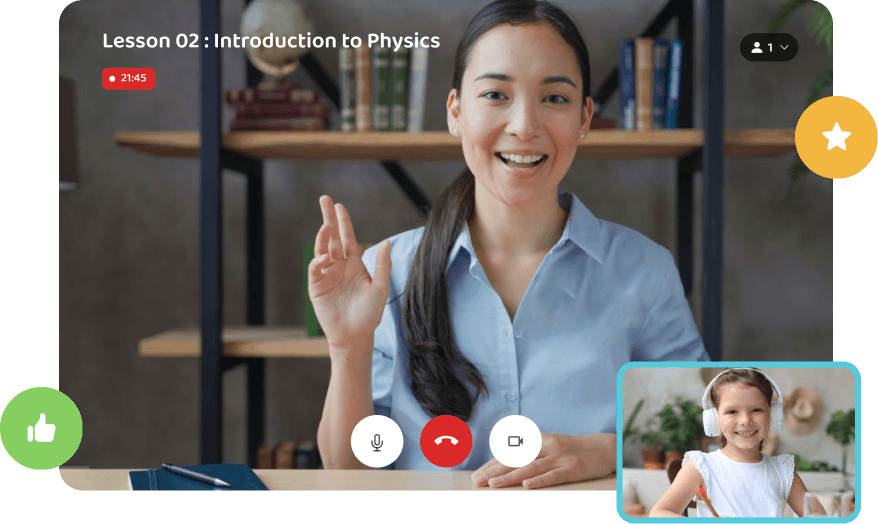
Real tutors, teaching live — never pre-recorded.
Every Year 6 session is with a named subject specialist, matched to your child on year group, current ability and the goals you set. Sit a free demo lesson before you decide.