Age 11-12 · Key Stage 3 · Year 7 · England
Year 7 British Curriculum — Complete Guide.
Everything parents need to know about Year 7 in the UK — the first year of secondary school, new subjects, transition support, and how Eleven Ace provides expert online tuition for every subject.


Trusted by 500+ families across the UK, UAE & India
Free demo class
Meet the tutor before you decide
500+
Happy students
20+
Subjects covered
Y1–13
Every year group
3
Countries

Core Subjects
Year 7 National Curriculum — Core Subjects
The three core subjects every Year 7 student studies under the British curriculum. Eleven Ace provides expert 1:1 and batch tuition for all of them.
Literature, Language & Analytical Writing
- Novel study — full-length novels with character and theme analysis
- Introduction to Shakespeare — A Midsummer Night’s Dream or The Tempest
- Analytical writing using PEEL paragraphs (Point, Evidence, Explain, Link)
- Creative writing — narrative, descriptive, poetry composition
- Media texts — adverts, articles, persuasive writing analysis
- Spoken English — presentations, debates, drama performances
- Grammar, spelling and punctuation at secondary level
Number, Algebra & Geometry
- Negative numbers — all four operations below zero
- Algebra basics — expressions, simplifying, substitution
- Ratio, proportion and percentage of amounts
- Area, perimeter, volume of prisms and compound shapes
- Transformations — reflection, rotation, translation, enlargement
- Probability — experimental vs theoretical, sample spaces
- Pie charts, scatter graphs and statistical averages
Biology, Chemistry & Physics
- Cells — animal, plant, specialised cells, microscopy
- Particles — states of matter, changes of state, diffusion
- Forces — contact/non-contact, speed, gravity, friction
- Energy — stores, transfers, conservation, efficiency
- Acids and alkalis — pH scale, indicators, neutralisation
- Reproduction — human and plant reproductive systems
- Ecosystems — food chains, interdependence, adaptation
- Earth structure — rocks, weathering, fossils, the rock cycle
Foundation Subjects
Foundation Subjects — Full Year 7 Curriculum
Year 7 introduces a far broader range of subjects than primary school. Students have specialist teachers for each subject — and Eleven Ace tutors cover them all.
Medieval period — the Norman Conquest (1066), feudal system, Magna Carta, medieval life. Source analysis, chronological understanding and historical enquiry.
Weather and climate systems, global development and inequality, advanced map skills including OS maps, grid references, contour lines and GIS.
Compulsory at KS3. Speaking, listening, reading and writing in target language. Topics include family, school life, hobbies, food and town.
Python basics — variables, loops, conditionals. Algorithms and computational thinking. Cyber security awareness and digital literacy.
Formal elements — line, tone, texture, colour, form. Drawing, painting, printmaking, sculpture. Study of artists and art movements.
Designing, making and evaluating products. Working with wood, metal, plastics and textiles. Food technology and nutrition.
Performing, composing, listening and appraising. Music theory — notation, rhythm, tempo, dynamics. Keyboard skills and ensemble work.
Relationships, mental health, online safety, identity, bullying prevention. Comparative religion, ethics, philosophy and moral questions.
Invasion games, net/wall sports, athletics, gymnastics, dance, fitness training. Swimming if not completed at primary level.
Often a new subject for Year 7. Improvisation, devising, script work, stage presence. Builds confidence and communication skills.
Democracy, rights and responsibilities, the law, local and national government. Developing informed and responsible citizens.
Offered at some schools. Latin grammar, vocabulary, Roman history and mythology. Strong foundation for English vocabulary and analytical thinking.
Eleven Ace Tuition
Expert Online Tuition for Every Year 7 Subject
Whether your child needs help settling into secondary school, catching up with new topics, or getting into the top set — Eleven Ace offers two flexible options across the entire UK.
1:1 Personalised Online Tuition
- Dedicated tutor matched to your child’s needs and learning style
- All Year 7 subjects — English, Maths, Science, MFL and more
- Flexible scheduling — evenings, weekends and school holidays
- Diagnostic assessment to identify gaps from Day 1
- Regular progress reports shared with parents every month
- Setting test preparation to help your child reach the top set
- Personalised pace — your child learns at their own speed, not a group’s
4-Student Batch Online Tuition
- Maximum 4 students per batch — every student gets individual attention
- Collaborative learning with peer motivation and healthy competition
- More affordable than 1:1 while maintaining high-quality teaching
- Grouped by ability level for best results and appropriate challenge
- All Year 7 curriculum subjects covered — English, Maths, Science and more
- Weekly homework and assessments included in every batch
- Same expert tutors as 1:1 — just a different learning format
Start Your Child’s Year 7 Journey Today.
1:1 tuition · 4-student batches · All subjects · Transition support · Across the UK
Book Free Year 7 Demo ClassAssessments
Assessments & Tests in Year 7
Year 7 has no statutory national tests — but schools conduct their own assessments extensively. Results from the first weeks directly influence which set your child is placed in for Maths, English and Science.
How Eleven Ace Helps
Our tutors prepare students for baseline assessments, setting tests and end-of-year exams. Regular mock tests and progress reports keep parents informed, and targeted tuition ensures your child is placed in the right set from the start.
What Year 7 Has
- Baseline tests (CAT4 / MidYIS) — taken in first half-term to assess cognitive ability and set students
- School internal exams — end-of-year exams in all subjects, used for reports and setting
- Teacher assessments — ongoing formative assessment across every subject throughout the year
- Setting tests — Maths, English and Science sets determined by early performance
- Half-termly progress checks — many schools issue effort and attainment grades each half-term
What Year 7 Does NOT Have
- No statutory national tests — KS2 SATs were completed in Year 6
- No GCSE content yet — GCSEs begin in Year 9 or 10 depending on school
- No external examinations — all assessments are school-internal
Maths
Year 7 Maths — Full Topic List
Every Maths topic your Year 7 child covers under the British curriculum. Eleven Ace tutors work through each of these systematically in 1:1 and batch sessions.
- Place value and ordering integers and decimals
- Negative numbers — all four operations
- Factors, multiples, primes, HCF and LCM
- Powers and roots — squares, cubes, index notation
- Order of operations (BIDMAS/BODMAS)
- Algebraic expressions — simplifying, expanding single brackets
- Substitution into formulae
- Solving one-step and two-step linear equations
- Sequences — term-to-term rule, nth term of linear sequences
- Equivalent fractions, simplifying fractions
- Add, subtract, multiply and divide fractions
- Mixed numbers and improper fractions
- Convert between fractions, decimals and percentages
- Percentage of amounts — with and without calculator
- Percentage increase and decrease
- Ratio — simplifying, sharing in a given ratio
- Direct proportion and simple rate problems
- Angles — at a point, on a line, in triangles, vertically opposite
- Properties of 2D shapes — triangles, quadrilaterals, polygons
- Transformations — reflection, rotation, translation, enlargement
- Coordinates in all four quadrants
- Perimeter, area of rectangles, triangles, parallelograms
- Volume of cubes, cuboids and prisms
- Metric unit conversion (length, mass, capacity)
- Pie charts, bar charts, scatter graphs
- Mean, median, mode, range
- Probability — single events, sample space diagrams, experimental probability
English
Year 7 English — Full Topic List
Every English topic covered in Year 7 under the British curriculum. Eleven Ace sessions build analytical thinking, essay-writing skills and literary confidence.
- Novel study — full-length novels with character, theme and plot analysis
- Shakespeare introduction — A Midsummer Night’s Dream, The Tempest
- Poetry anthology — analysing imagery, structure, form and effect
- Non-fiction texts — articles, speeches, letters, reviews
- Inference, deduction and language analysis (PEE/PEEL)
- Comparison skills — comparing writers’ viewpoints and methods
- Gothic fiction, mythology, adventure, war poetry
- Narrative writing — short stories with structure and technique
- Descriptive writing — sensory language, imagery, atmosphere
- Persuasive writing — speeches, letters, articles
- Analytical essays using PEEL paragraphs
- Media texts — adverts, reviews, blog posts
- Planning, drafting, editing and proofreading as process
- Sentence structures — simple, compound, complex
- Paragraphing and discourse markers
- Punctuation — semi-colons, colons, dashes, apostrophes
- Active and passive voice
- Vocabulary development — ambitious word choices
- Presentations, group discussions, debate skills
- Drama — performance, improvisation, role play
Transition
Primary to Secondary — The Big Transition
Moving from primary to secondary school is one of the biggest changes in a child’s life. Year 7 brings a completely new environment, new expectations, and new challenges. Here are the six key changes every family should prepare for.
Multiple Teachers
In primary school, children had one or two teachers. In Year 7, they have a different specialist teacher for every subject — up to 10 or more. This means adapting to different teaching styles, expectations and classroom rules.
Homework Expectations
Homework increases significantly in Year 7. Students may receive homework from multiple subjects each night, requiring time management, organisation and a homework planner or diary.
New Subjects
Year 7 introduces subjects that did not exist at primary level — Drama, separate Science disciplines, Computing with Python, Design Technology, Citizenship and more. Keeping up requires curiosity and effort.
Larger School
Secondary schools are physically much larger than primary schools. Students move between classrooms, navigate corridors and use different facilities. Getting lost in the first week is completely normal — and quickly overcome.
Making New Friends
Children arrive from many different primary schools. While this can feel daunting, it is also an exciting opportunity to make new friendships. Schools actively support social integration through form groups, clubs and team activities.
Independence & Responsibility
Year 7 students are expected to be more independent — managing their own timetable, organising equipment for different lessons, travelling to school, and taking responsibility for their learning.
Parent Guide
What to Do in Year 7
A term-by-term action plan for parents navigating Year 7. Follow this timeline to support your child’s transition and academic progress.
- Attend the parents’ induction evening — understand the school’s expectations and policies
- Help set up a homework routine — a consistent time and quiet space each evening
- Check baseline test results — CAT4 or MidYIS results determine sets; ask the school if unclear
- Encourage extracurricular clubs — sport, music, drama and academic clubs help children settle
- Book a free demo with Eleven Ace — start tuition while the year is fresh
- Review half-termly progress reports — check effort grades as well as attainment
- Support revision for end-of-year exams — this is often a child’s first proper exam experience
- Stay in contact with form tutor — address any pastoral or academic concerns early
- Monitor friendships and social wellbeing — the transition period can last all year
- Review progress with your Eleven Ace tutor — adjust focus based on school reports and set placement
Why Year 7 Parents Choose Eleven Ace
- All subjects in one place — no juggling multiple tutors or platforms
- Transition support — helping children adjust to secondary-level expectations
- Setting test preparation — ensuring your child reaches the top set from the start
- Progress visibility — monthly reports so you always know where your child stands
- UK-wide coverage — expert tutors available wherever you are
- Free demo class — try before you commit, no obligation
FAQ
Frequently Asked Questions — Year 7
Everything parents ask about Year 7 and the secondary transition, answered clearly.
No. Year 7 has no statutory national tests. KS2 SATs were completed in Year 6 and GCSEs do not begin until Year 9 or 10. However, most schools conduct baseline assessments (CAT4 or MidYIS) in the first half-term and internal exams at the end of the year.
Wellbeing
Child Wellbeing — Navigating the Year 7 Transition
The move to secondary school is exciting but can also bring anxiety, social changes and emotional challenges. Supporting your child’s wellbeing is just as important as their academic progress.
Fear of getting lost, worrying about making friends, concern about harder work — these are all completely normal. Most children settle within the first half-term. Talk openly, acknowledge feelings, and reassure them that it takes time.
The settling-in period can last from a few weeks to an entire term. Encourage your child to join clubs, talk to form tutors, and establish routines early. Eleven Ace tuition can provide a stable, familiar learning anchor during this period of change.
Year 7 students can be vulnerable to bullying, including cyberbullying. Know your school’s anti-bullying policy. Watch for signs: reluctance to attend school, mood changes, loss of belongings. Report concerns to the form tutor or head of year immediately.
Friendships shift significantly in Year 7. Old primary school friendships may change as children meet new people. This is a natural part of growing up. Encourage a wide social circle and open conversations about relationships and peer pressure.
Book Free Year 7 Demo Class.
1:1 Tuition · 4-Student Batches · All Subjects · Transition Support · Across the UK
English · Maths · Science · History · Geography · MFL · Computing · Drama · Art · DT · Music
Book Free Year 7 Demo ClassWho teaches it
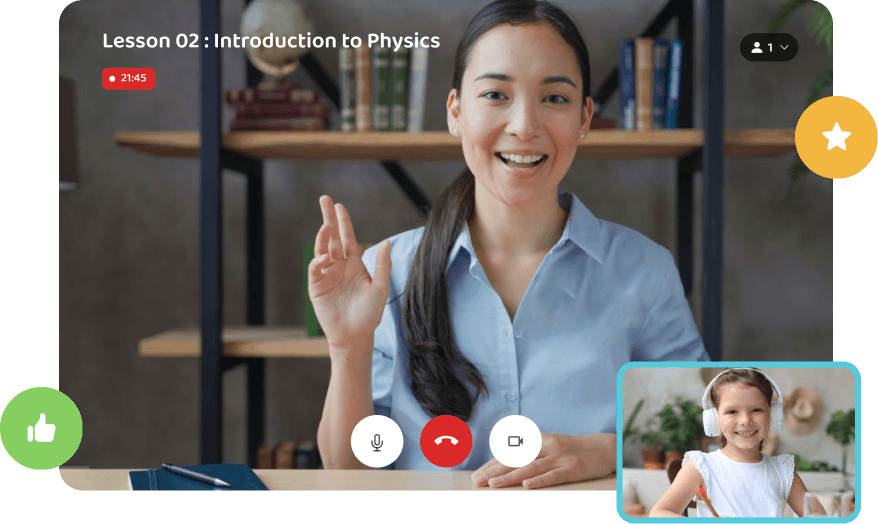
Real tutors, teaching live — never pre-recorded.
Every Year 7 session is with a named subject specialist, matched to your child on year group, current ability and the goals you set. Sit a free demo lesson before you decide.