Age 12–13 · Key Stage 3 · Year 8 · England
Year 8 British Curriculum — Complete Guide.
Everything parents need to know about Year 8 in the UK — curriculum, subjects, assessments, GCSE options preparation, and how Eleven Ace provides expert online tuition for every subject.


Trusted by 500+ families across the UK, UAE & India
Free demo class
Meet the tutor before you decide
500+
Happy students
20+
Subjects covered
Y1–13
Every year group
3
Countries
Core Subjects
Year 8 National Curriculum — Core Subjects
The three core subjects every Year 8 student studies under the British curriculum. Eleven Ace provides expert 1:1 and batch tuition for all of them.
Literature, Writing & Analysis
- Wider reading including 19th-century prose and poetry texts
- Shakespeare play study — character, themes, language analysis
- Discursive and argumentative writing with structured paragraphs
- Analytical essay skills — PEE/PEEL paragraph structure
- Creative writing — narrative voice, atmosphere, tension
- Non-fiction analysis — speeches, articles, reviews, letters
- Spoken language — debate, presentations, dramatic performance
Algebra, Geometry & Probability
- Algebraic expressions — simplifying, expanding, factorising
- Sequences — linear, geometric, finding nth term rules
- Ratio and proportion — scaling, recipe problems, maps
- Introduction to Pythagoras' theorem
- Probability — theoretical and experimental, sample spaces
- Compound shapes — area and perimeter of complex figures
- Transformations — rotation, reflection, translation, enlargement
Chemistry, Physics & Biology
- Periodic table — groups, periods, element properties
- Chemical reactions — acids, alkalis, neutralisation, word equations
- Waves — sound, light, reflection, refraction
- Electromagnets — circuits, magnetic fields, applications
- Photosynthesis — factors, leaf structure, experiments
- Respiration — aerobic and anaerobic, gas exchange
- Introduction to genetics — DNA, inheritance, variation
Foundation Subjects
Foundation Subjects — Full Year 8 Curriculum
Beyond the core three, Year 8 students study a broad range of foundation subjects. Eleven Ace tutors cover these too — from History to Computing and beyond.
The English Civil War, Industrial Revolution, British Empire, transatlantic slave trade. Source evaluation, causation, significance and historical interpretations.
Tectonic hazards, weather and climate, development and globalisation, urbanisation, resource management. Fieldwork, data analysis and GIS skills.
Past tense, future tense, opinions and justifications, longer texts, role-play dialogues. Building towards GCSE language skills and possible option choice.
Python programming, algorithms, Boolean logic, data representation, cyber security, networks and web development basics. Computational thinking skills.
Observational drawing, printmaking, mixed media, digital art, studying contemporary and historical artists. Developing personal style and portfolio work.
CAD/CAM design, electronics, resistant materials, food technology, textiles. Iterative design process, prototyping, and evaluation skills.
Composition, ensemble performance, music technology, world music traditions, blues, jazz and pop structures. Music theory and notation development.
Relationships and sex education, mental health awareness, online safety, financial literacy, citizenship. Comparative religion, ethics and philosophical questions.
Team sports (basketball, football, rugby, netball), athletics, gymnastics, dance, outdoor adventure activities. Fitness testing and healthy lifestyle education.
Eleven Ace Tuition
Expert Online Tuition for Every Year 8 Subject
Whether your child needs support consolidating KS3 content, preparing for GCSE option choices, or getting ahead — Eleven Ace offers two flexible options across the entire UK.
1:1 Personalised Online Tuition
- Dedicated tutor matched to your child's needs and learning style
- All Year 8 subjects — English, Maths, Science, Humanities and more
- Flexible scheduling — evenings, weekends and school holidays
- Diagnostic assessment to identify gaps from Day 1
- Regular progress reports shared with parents every month
- GCSE-ready preparation — building foundations for option subjects
- Personalised pace — your child learns at their own speed, not a group's
4-Student Batch Online Tuition
- Maximum 4 students per batch — every student gets individual attention
- Collaborative learning with peer motivation and healthy competition
- More affordable than 1:1 while maintaining high-quality teaching
- Grouped by ability level for best results and appropriate challenge
- All Year 8 curriculum subjects covered — English, Maths, Science and more
- Weekly homework and assessments included in every batch
- Same expert tutors as 1:1 — just a different learning format
Start Your Child's Year 8 Journey Today.
1:1 tuition · 4-student batches · All subjects · GCSE foundations · Across the UK
Book Free Year 8 Demo ClassAssessments
Assessments & Tests in Year 8
Year 8 has no statutory national tests. However, schools use internal assessments to track progress, review setting arrangements, and begin identifying strengths ahead of GCSE option choices.
How Eleven Ace Helps
Our tutors prepare students for end-of-year exams, help maintain strong teacher assessment grades, and ensure KS3 foundations are solid before GCSE content begins. Regular progress reports keep parents informed throughout the year.
What Year 8 Does NOT Have
- No statutory national tests — no SATs, no government-mandated exams
- No formal GCSE exams — GCSEs begin in Year 10 (exams in Year 11)
- No national benchmarking — assessment is entirely school-managed
What Year 8 Does Have
- End-of-year exams — formal examinations in most subjects, used for reports and setting
- Teacher assessments — ongoing tracking against KS3 curriculum expectations
- Setting reviews — students may move between ability sets based on Year 8 performance
- Progress reports — termly or half-termly reports sent to parents
Maths
Year 8 Maths — Full Topic List
Every Maths topic your Year 8 child covers under the British curriculum. Eleven Ace tutors work through each of these systematically in 1:1 and batch sessions.
- Standard form (scientific notation)
- Indices and laws of indices
- Algebraic expressions — expanding double brackets
- Factorising expressions — single and double brackets
- Solving linear equations with unknowns on both sides
- Sequences — linear, quadratic and geometric patterns
- Simultaneous equations (introduction)
- Inequalities — representing on number lines
- Fractions, decimals and percentages — complex problems
- Ratio — simplifying, sharing in a given ratio
- Direct and inverse proportion
- Percentage increase and decrease
- Compound interest and repeated percentage change
- Probability — sample spaces, tree diagrams, Venn diagrams
- Relative frequency and experimental probability
- Expected outcomes and probability calculations
- Speed, distance, time problems
- Pythagoras' theorem — finding hypotenuse and shorter sides
- Angles in parallel lines — alternate, corresponding, co-interior
- Interior and exterior angles of polygons
- Transformations — rotation, reflection, translation, enlargement
- Area of triangles, parallelograms, trapeziums and compound shapes
- Circumference and area of circles
- Volume and surface area of prisms
- Scatter graphs, correlation, line of best fit, averages from tables
English
Year 8 English — Full Topic List
Every English topic covered in Year 8 under the British curriculum. Eleven Ace sessions develop analytical writing, wider reading skills and GCSE-ready essay technique.
- 19th-century prose — Dickens, Conan Doyle, Shelley, Stevenson
- Shakespeare — full play study (e.g. The Tempest, Much Ado)
- Modern fiction and non-fiction — diverse voices and perspectives
- Poetry from different periods and cultures
- Analysing language, structure and form in detail
- Understanding context and its influence on texts
- Comparing texts — themes, writers' methods, viewpoints
- Discursive and argumentative essays with balanced viewpoints
- Persuasive writing — speeches, opinion articles, formal letters
- Narrative writing — complex plots, multiple characters, flashbacks
- Descriptive writing — sensory language, pathetic fallacy, symbolism
- Transactional writing — reviews, reports, advice texts
- Planning, drafting, editing with increasing independence
- PEE/PEEL analytical paragraph structure
- Embedding quotations fluently in analysis
- Complex sentence structures — subordinate clauses, appositives
- Semicolons, colons, dashes for effect
- Subject-specific terminology in English literature
- Rhetorical devices — anaphora, tricolon, antithesis
- Formal register and academic writing conventions
GCSE Options
Preparing for GCSE Options — What Parents Must Know in Year 8
GCSE option choices are typically made in Year 9, but many schools begin the conversation in Year 8. Understanding the landscape now gives your child a significant advantage. Some schools even start GCSE content in Year 8.
- Compulsory subjects — English Language, English Literature, Maths, Science (combined or triple), PE (non-exam)
- Option subjects — students typically choose 3–4 additional GCSEs from a list
- EBacc subjects — History or Geography, and a Modern Foreign Language are recommended by the government
- Creative and practical options — Art, Music, Drama, DT, Computing, Business, Media Studies
- Some schools offer BTECs and vocational qualifications alongside or instead of certain GCSEs
Follow Strengths & Interests
Choose subjects your child enjoys and performs well in. Motivation sustains effort over two years of GCSE study.
Consider the EBacc
Taking History or Geography plus an MFL keeps more A-level and university paths open. Many schools encourage it.
Think About Career Implications
Some A-levels and university courses prefer specific GCSEs. Medicine, engineering, and law benefit from particular subject combinations.
Keep a Balanced Curriculum
A mix of humanities, sciences, creative and practical subjects demonstrates breadth. Avoid choosing subjects just because friends do.
The English Baccalaureate (EBacc)
The EBacc is a government performance measure, not a qualification. It tracks whether students take GCSEs in these subject areas.
| EBacc Pillar | Subjects | Requirement | Notes |
|---|---|---|---|
| English | English Language & English Literature | Both required | Compulsory for all students |
| Maths | Mathematics | Required | Compulsory for all students |
| Sciences | Combined Science or Triple Science (Biology, Chemistry, Physics) | At least 2 science GCSEs | Compulsory for all students |
| Humanities | History or Geography | At least one | Option — strongly recommended |
| Languages | French, Spanish, German, or other approved MFL | At least one | Option — strongly recommended |
Parent Guide
What to Do in Year 8
A term-by-term action plan for parents navigating Year 8. Follow this timeline to stay ahead and support your child's academic progress and GCSE preparation.
- Review Year 7 reports — identify any subjects where gaps carried over
- Discuss setting arrangements — understand which sets your child is in and why
- Begin exploring GCSE options — research what subjects are available at your child's school
- Establish good study habits — Year 8 homework increases; build a consistent routine
- Book a free demo with Eleven Ace — address any weaknesses early in the year
- Attend parents' evenings — ask teachers which GCSE subjects suit your child
- Strengthen core subjects — solid English, Maths and Science underpin all GCSE success
- Prepare for end-of-year exams — Year 8 results influence Year 9 setting and GCSE recommendations
- Discuss career interests — early conversations help guide option choices
- Review progress with your Eleven Ace tutor — adjust focus based on school reports and exam results
Why Year 8 Parents Choose Eleven Ace
- All subjects in one place — no juggling multiple tutors or platforms
- KS3 and GCSE expertise — our tutors know exactly what comes next
- Flexible 1:1 or batch options — choose what works for your family
- Progress visibility — monthly reports so you always know where your child stands
- UK-wide coverage — expert tutors available wherever you are
- Free demo class — try before you commit, no obligation
FAQ
Frequently Asked Questions — Year 8
Everything parents ask about Year 8 in the British curriculum, answered clearly.
No. Year 8 has no statutory national tests. Schools set their own internal end-of-year exams and use ongoing teacher assessments to track progress. These results inform setting decisions and progress reports sent to parents.
Wellbeing
Child Wellbeing — Navigating Year 8 Adolescence
Year 8 is a key year for adolescent development. Social pressures intensify, academic expectations increase, and emotional changes are significant. Supporting the whole child matters as much as supporting their grades.
Year 8 students are deep into adolescence. Friendship dynamics shift, social media influence grows, and peer pressure becomes more complex. Open communication at home and a supportive school environment are essential.
The workload in Year 8 is noticeably heavier than Year 7. Homework expectations increase, content becomes more challenging, and teachers expect greater independence. Building good study habits now prevents burnout at GCSE.
Most Year 8 students are active on social media. Setting healthy boundaries around screen time, discussing online safety, and modelling balanced technology use helps maintain focus and mental health.
Show interest in their learning without making every conversation about grades. Praise effort over results. Encourage extracurricular activities and friendships alongside academic work. Eleven Ace sessions are designed to be supportive and confidence-building, not stressful.
Book Free Year 8 Demo Class.
1:1 Tuition · 4-Student Batches · All Subjects · GCSE Foundations · Across the UK
English · Maths · Science · History · Geography · MFL · Computing · Art · Music · DT · PSHE
Book Free Year 8 Demo ClassWho teaches it
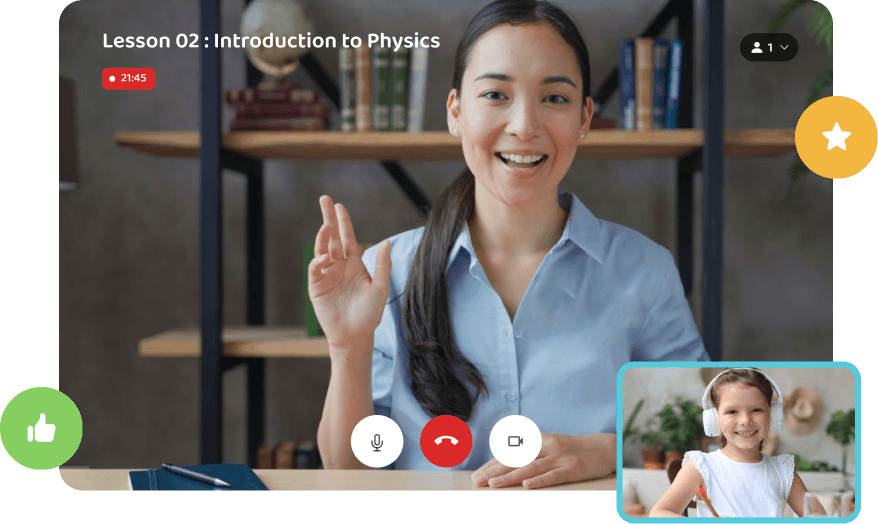
Real tutors, teaching live — never pre-recorded.
Every Year 8 session is with a named subject specialist, matched to your child on year group, current ability and the goals you set. Sit a free demo lesson before you decide.