Year 9
British Curriculum
Complete Guide.
Everything parents need to know about Year 9 in the UK — curriculum, GCSE options, assessments, and how Eleven Ace provides expert online tuition to build rock-solid GCSE foundations.

What Is Year 9?
Year 9 is the year group for children aged 13–14 in England, Wales and Northern Ireland. It is the final year of Key Stage 3 (Years 7–9). In some schools, students begin their GCSE (Key Stage 4) courses early in Year 9.
This is the year students choose their GCSE option subjects — one of the most consequential decisions of their school career. Strong foundations built in Year 9 directly determine GCSE success in Years 10 and 11.
- Final year of Key Stage 3 — or start of KS4/GCSE in many schools
- GCSE option choices made this year — subjects studied for the next 2–3 years
- Equivalent to Grade 8 (USA), S3 (Scotland), 3rd Year (Ireland)
- No statutory national tests — but end-of-year exams often used for GCSE setting
- Critical foundation year — gaps in Year 9 become serious problems at GCSE


Year 9 National Curriculum — Core Subjects
The three core subjects every Year 9 student studies. In many schools, GCSE-level content begins this year. Eleven Ace provides expert 1:1 and batch tuition for all of them.

Literature, Language & Analysis
- Pre-GCSE literature study — novels, plays and poetry anthologies
- Shakespeare study — full plays, not just extracts (e.g. Romeo and Juliet, The Tempest)
- Analytical essays — PEE/PETAL paragraphs, evaluating language and structure
- Comparing texts across time periods, genres and perspectives
- Creative writing for purpose — descriptive, narrative, persuasive, discursive
- Spoken language — formal presentations, debates and group discussions
- Media literacy — analysing advertisements, news articles and digital texts
Algebra, Trigonometry & Statistics
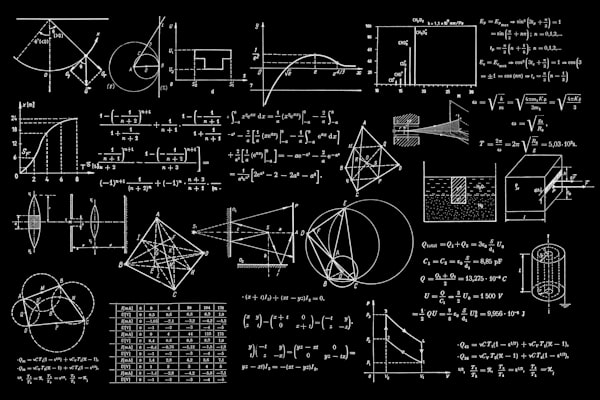
- Introduction to simultaneous equations — elimination and substitution methods
- Trigonometry introduction — sine, cosine and tangent ratios in right-angled triangles
- Standard form — converting large and small numbers
- Compound interest and percentage change problems
- Advanced algebra — factorising, expanding double brackets, quadratic expressions
- Bearings, constructions with compass and protractor, loci
- Cumulative frequency, box plots and histograms

Physics, Chemistry & Biology
- Atomic structure — protons, neutrons, electrons, electron configuration
- Balancing chemical equations and types of chemical reactions
- Waves — transverse and longitudinal, frequency, amplitude, wave speed equation
- Electromagnets — magnetic fields, solenoids, motor effect
- Evolution and natural selection — Darwin, Wallace, fossil evidence
- Ecology — ecosystems, food webs, biodiversity, human impact on environment
- Advanced cell biology — mitosis, stem cells, diffusion, osmosis, active transport
Foundation & Option Subjects — Year 9 Curriculum
Beyond the core three, Year 9 students study foundation subjects and begin exploring GCSE option subjects. Eleven Ace tutors cover these too — from History to Business Studies.


World War I and II, the Cold War, Civil Rights movements, the Holocaust. Source analysis, causation essays, and evaluating historical interpretations.
Globalisation, development, urbanisation, resource management, tectonic hazards. Fieldwork skills, data analysis and geographical decision-making.
Complex sentence structures, past and future tenses, extended writing and listening comprehension. Preparation for GCSE-level language assessment.
Python programming, algorithms, data representation, Boolean logic, computer networks, cybersecurity principles. Foundation for GCSE Computer Science.
Enterprise, marketing, finance basics, business planning. A popular GCSE option subject — often introduced through taster lessons in Year 9.
Devising performances, script analysis, stagecraft. Media — analysing film, advertising and digital media. Both available as GCSE options in most schools.
Developing personal portfolios, artist research, mixed media, printmaking and photography. Assessed through coursework at GCSE level.
Some schools offer taster modules in sociology and psychology. Popular GCSE and A-Level choices — Year 9 exposure helps students decide wisely.
Team sports, fitness, leadership. PSHE covers relationships, mental health, careers guidance, online safety and financial literacy. GCSE PE is an option.
Expert Online Tuition for Every Year 9 Subject
Whether your child needs help keeping up with KS3, getting ahead for GCSEs, or choosing the right option subjects — Eleven Ace offers two flexible options across the entire UK.

Get Ahead Before GCSEs Start.
1:1 tuition · 4-student batches · All subjects · GCSE foundations · Across the UK
Book Free Year 9 Demo ClassAssessments & Tests in Year 9
Year 9 has no statutory national tests — but school-level assessment is critical. End-of-year exam results often determine which GCSE set (higher or foundation) students are placed into.

How Eleven Ace Helps
Our tutors prepare students for end-of-year exams, GCSE readiness tests, and help ensure they are placed in the highest possible sets. Regular mock tests and progress reports keep parents fully informed.
What Year 9 Assessments Include
- End-of-year exams — often used to set students into Higher or Foundation GCSE tiers
- Teacher assessments — ongoing tracking against KS3 targets throughout the year
- GCSE readiness tests — many schools assess whether students are prepared for KS4 content
- Subject-specific assessments — controlled assessments, lab reports, essays and projects
Why Year 9 Results Matter
- GCSE set placement — Higher tier gives access to grades 9–4; Foundation caps at grade 5
- Predicted grades — Year 9 performance informs early GCSE predictions
- Confidence and momentum — strong Year 9 results build self-belief heading into GCSEs
Schools Starting GCSEs in Year 9
- 3-year GCSE courses — some schools begin GCSE syllabuses in Year 9 for depth
- Controlled assessments — early GCSE coursework may count towards final grades
- Early exam entry — a few schools enter students for one GCSE in Year 10 instead of Year 11
Year 9 Maths — Full Topic List
Every Maths topic your Year 9 child covers, bridging KS3 and GCSE content. Eleven Ace tutors work through each of these systematically in 1:1 and batch sessions.

- Standard form — converting and calculating with very large and small numbers
- Surds — simplifying and rationalising (higher tier introduction)
- Index laws — negative and fractional indices
- Expanding double brackets and factorising quadratics
- Simultaneous equations — elimination and substitution
- Inequalities — solving and representing on number lines
- Compound interest, repeated percentage change, reverse percentages
- Direct and inverse proportion
- Sequences — nth term of quadratic sequences
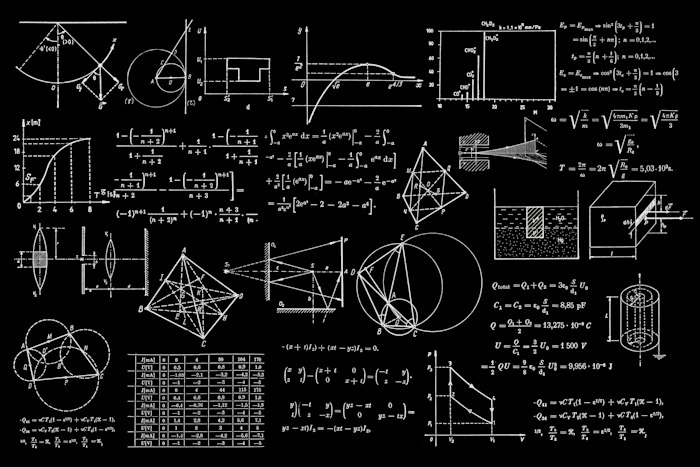
- Trigonometry — SOHCAHTOA in right-angled triangles
- Pythagoras' theorem and its applications
- Bearings — three-figure bearings and scale drawings
- Constructions — perpendicular bisectors, angle bisectors, loci
- Circle theorems introduction — angles, tangents, chords
- Surface area and volume of prisms, cylinders, cones and spheres
- Transformations — rotation, reflection, translation, enlargement with fractional scale factors
- Vectors introduction — column vectors, addition and scalar multiplication
- Cumulative frequency diagrams and box plots
- Histograms with unequal class widths
- Interquartile range and comparing distributions
- Scatter graphs — correlation, lines of best fit, interpolation and extrapolation
- Probability — mutually exclusive and independent events
- Tree diagrams and sample spaces
- Relative frequency and experimental probability
- Venn diagrams and set notation
Year 9 English — Full Topic List
Every English topic covered in Year 9, building the analytical and creative skills needed for GCSE English Language and Literature.

- Shakespeare — full play study (Romeo and Juliet, The Tempest, Much Ado About Nothing)
- 19th-century fiction — Dickens, Shelley, Stevenson, Brontë
- Modern prose — Of Mice and Men, The Boy in the Striped Pyjamas, Noughts and Crosses
- Poetry anthology — war poetry, love poetry, identity poetry
- Non-fiction — speeches, journalism, travel writing, autobiographies
- Comparing writers' perspectives across time periods
- Evaluating how writers use language and structure for effect

- Analytical essays — PEE/PETAL paragraphs with embedded quotations
- Creative writing — descriptive and narrative pieces for exam practice
- Persuasive and argumentative writing — speeches, articles, letters to editors
- Discursive essays — presenting balanced viewpoints with a conclusion
- Transactional writing — reports, reviews, formal letters
- Planning, drafting and proofreading under timed conditions

- Advanced punctuation — semicolons, colons, dashes, ellipsis for effect
- Sentence structures — simple, compound, complex; fragments for impact
- Rhetorical devices — anaphora, tricolon, antithesis, hyperbole
- Literary terminology — pathetic fallacy, foreshadowing, symbolism, irony
- Vocabulary development — ambitious word choices, connotation and tone
- Spoken language endorsement — presentations, debates, formal speeches
- Spelling patterns — homophones, commonly confused words, subject-specific vocabulary
GCSE Options Guide — What Parents Must Know in Year 9
Year 9 is when students choose their GCSE option subjects — decisions that shape the next two years and influence A-Level, university and career pathways. Understanding the system helps families make informed choices.
 What Are GCSE Options?
- Compulsory subjects: English Language, English Literature, Maths, Science (Combined or Triple), PE (non-exam)
- EBacc subjects: History or Geography, plus a Modern Foreign Language — strongly encouraged by the government
- Option subjects: typically 3–4 chosen from a list (varies by school) — these are what students select in Year 9
- Total GCSEs: most students take 8–10 GCSEs in total across Years 10 and 11
- Options are organised into option blocks — students pick one subject from each block
 How to Choose Wisely
Consider Strengths & Interests
Choose subjects your child enjoys and performs well in. Two years of GCSE study is difficult without genuine interest.
Think About Career Paths
Some careers require specific GCSEs. Medicine needs Triple Science. Engineering benefits from Further Maths. Research early.
Check University Requirements
Russell Group universities value the EBacc combination. Some A-Levels require specific GCSEs as prerequisites.
Keep Options Open
A balanced mix of humanities, sciences and creative subjects preserves the widest range of future pathways.
Typical GCSE Option Blocks (Example)
Schools organise options into blocks. Students choose one subject from each block. This example shows a common layout.
| Block A | Block B | Block C | Block D |
|---|---|---|---|
| History | Geography | French | Art & Design |
| Computer Science | Spanish | Business Studies | Drama |
| Triple Science | Music | Media Studies | Sociology |
| Design & Technology | Religious Studies | PE (GCSE) | Food Preparation & Nutrition |
The English Baccalaureate measures students taking English, Maths, Science, a Humanity (History or Geography), and a Modern Foreign Language. Schools are encouraged to offer EBacc to all students.
Choosing based on friends' choices, picking subjects to avoid a specific teacher, dropping a language without understanding future implications, or overloading on essay-heavy or coursework-heavy subjects.
Triple Science = 3 separate GCSEs (Biology, Chemistry, Physics). Combined Science = 2 GCSEs covering all three. Triple is recommended for students aiming at science A-Levels or medical careers.
What to Do in Year 9
A term-by-term action plan for parents navigating Year 9. Follow this timeline to help your child make the best GCSE choices and build strong foundations.
- Attend GCSE options evening — most schools hold information events in Autumn or early Spring
- Identify subject strengths and weaknesses — end-of-Year-8 reports provide valuable data
- Research career paths with your child — understand which GCSEs are needed for their interests
- Address any KS3 gaps early — Year 9 content builds directly on Years 7 and 8
- Book a free demo with Eleven Ace — start tuition to strengthen weak areas before options are chosen
- Submit GCSE option choices — deadlines are typically February–March of Year 9
- Prepare for end-of-year exams — results determine GCSE tier placement (Higher or Foundation)
- Begin GCSE revision habits — some schools start GCSE content in the Summer term of Year 9
- Support independent study skills — Year 9 students need to develop self-directed revision strategies
- Review progress with your Eleven Ace tutor — adjust focus based on Year 9 exam results and GCSE readiness
Why Year 9 Parents Choose Eleven Ace
- All subjects in one place — no juggling multiple tutors or platforms
- GCSE-ready preparation — tutors bridge KS3 gaps and introduce GCSE-level content early
- Flexible 1:1 or batch options — choose what works for your family and budget
- Progress visibility — monthly reports so you always know where your child stands
- UK-wide coverage — expert tutors available wherever you are in the UK
- Free demo class — try before you commit, no obligation whatsoever
Frequently Asked Questions — Year 9
Everything parents ask about Year 9, GCSE options and preparing for Key Stage 4, answered clearly.
Are there any national tests in Year 9?
When do students choose their GCSE options?
How many GCSEs does my child take?
What is the EBacc and does it matter?
Should my child take Triple or Combined Science?
Do some schools start GCSEs in Year 9?
What if my child picks the wrong GCSE options?
How important is Year 9 for GCSE success?
Does my child need a tutor in Year 9?
What should a Year 9 student know by year end?
Child Wellbeing — Navigating Year 9 Pressures
Year 9 brings unique emotional challenges. Students are developing their identity, facing early exam anxiety, and making decisions that feel high-stakes. Supporting their wellbeing is just as important as academic progress.

At 13–14, students are forming their sense of self. Friendships shift, peer groups change, and identity exploration is normal. Support their interests while maintaining academic structure.
Year 9 is when exam anxiety often begins. End-of-year tests, GCSE setting exams, and the pressure of option choices can feel overwhelming. Eleven Ace tutors build confidence through preparation, not pressure.

Most Year 9 students are active on social media. Comparison, cyberbullying, and screen time can affect mental health and concentration. Open conversations about online experiences are essential.
GCSE option choices make the future feel suddenly real. Reassure your child that very few decisions at 13 are irreversible. Most career paths remain open regardless of specific option choices — breadth and balance matter most.
Book Free Year 9 Demo Class.
1:1 Tuition · 4-Student Batches · All Subjects · GCSE Foundations · Across the UK
English · Maths · Science · History · Geography · Computing · Business · Languages · Drama · Media · Sociology
Book Free Year 9 Demo Class