Eleven Ace Learn · Early access · Years 3–5
11+ practice your child will actually keep doing
Our self-learning platform, opening soon to families
Eleven Ace Learn turns 11+ maths into something your child picks up on their own: one question at a time, getting harder as they get better, with a clue when they are stuck. You get a plain view of every skill they have mastered — and every one they have not.
No card needed to register · We will email you when places open


6-day streak
4 skills mastered this week
Why they keep going back
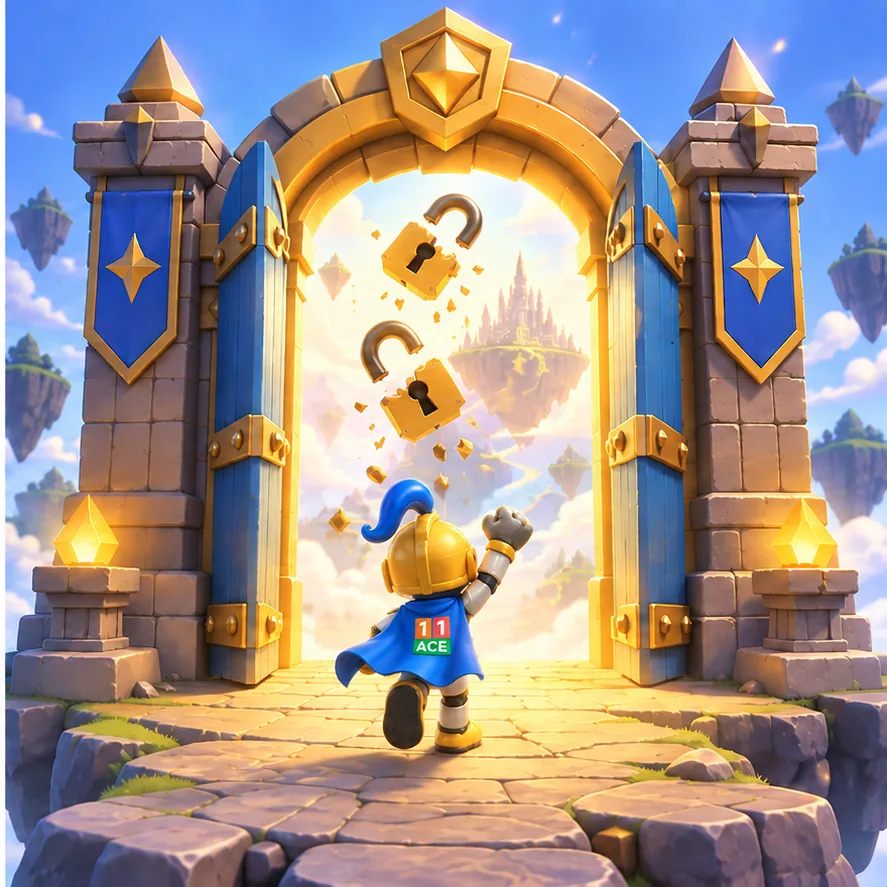
It looks like an adventure, because it is one
Underneath it is a full 11+ curriculum, marked skill by skill. On your child's screen it is five worlds to cross, a character to be, and something to beat at the end of each one.




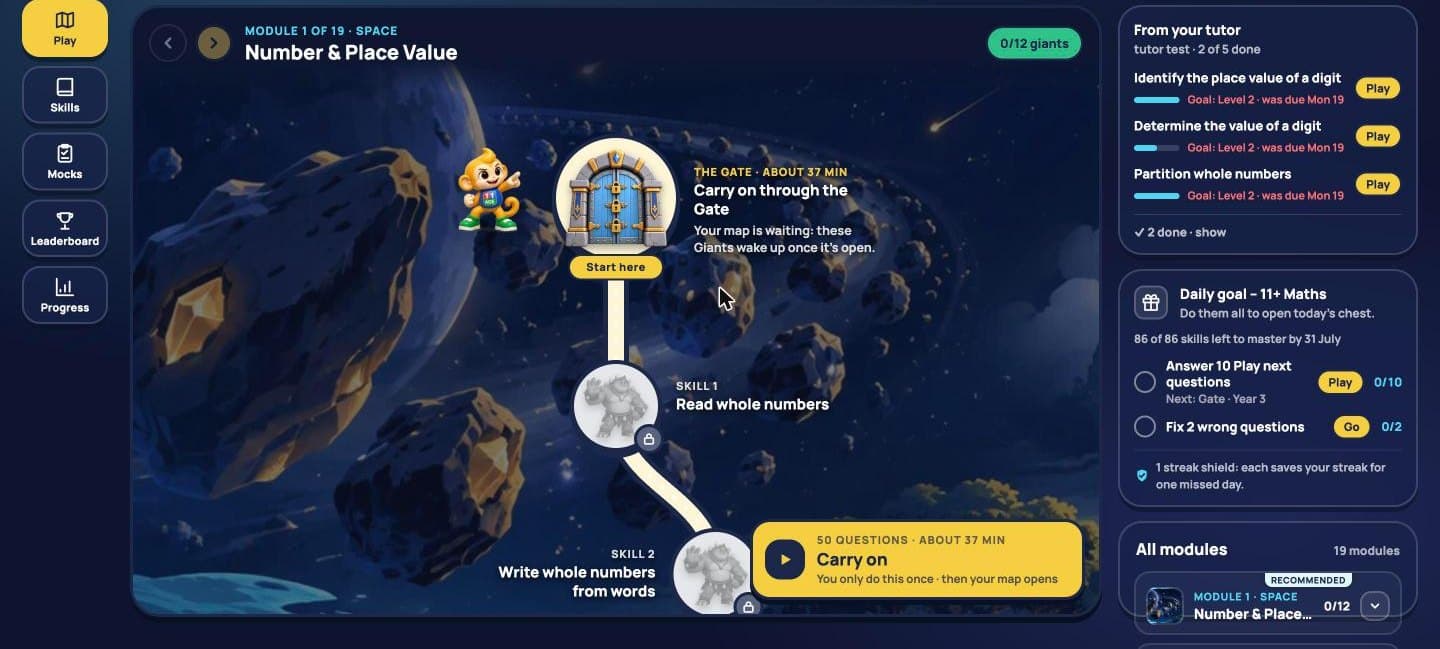
Pick who you want to be
Five characters, each with their own look and reactions — they cheer when your child gets one right and think hard when they do not. Children change character whenever they like, and it costs nothing.






Tuition and practice, joined up
Your tutor sets the practice. The platform marks it.
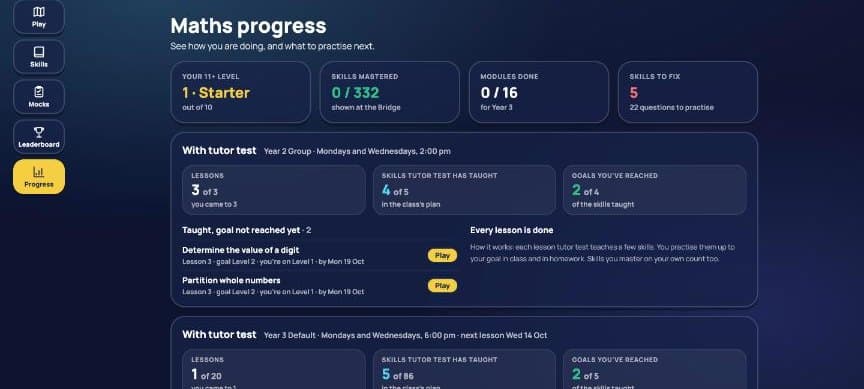
If your child also has lessons with us, the two are not separate things. Whatever their tutor teaches in a lesson becomes the skills waiting on your child’s screen that week — and you can see which of them they actually reached.
- Skills the tutor taught in class, listed against what your child has mastered
- Goals carried from the lesson, with the level to reach and the day it is due
- Wrong answers from class practice and papers collected on one list to fix
A look inside
See exactly what your child will open
Your child gets a map to cross and a character to be. You get a straight list of what they have mastered, what they are still learning, and what they have not started. These are the real screens, captured this week.
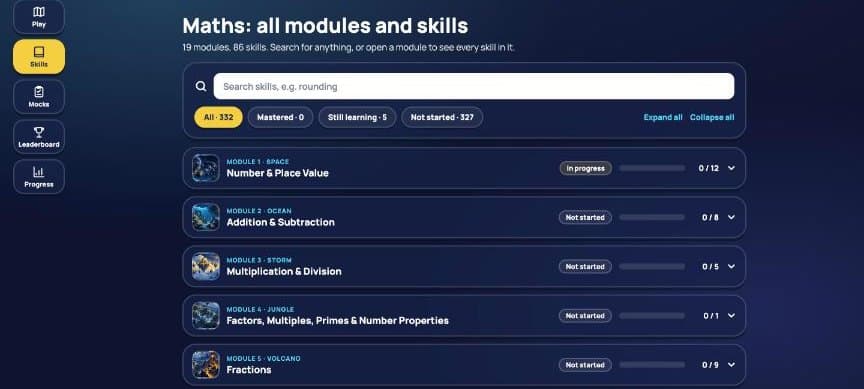
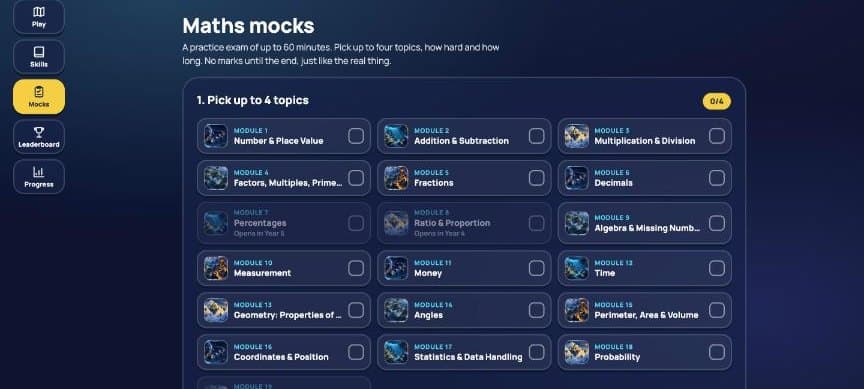
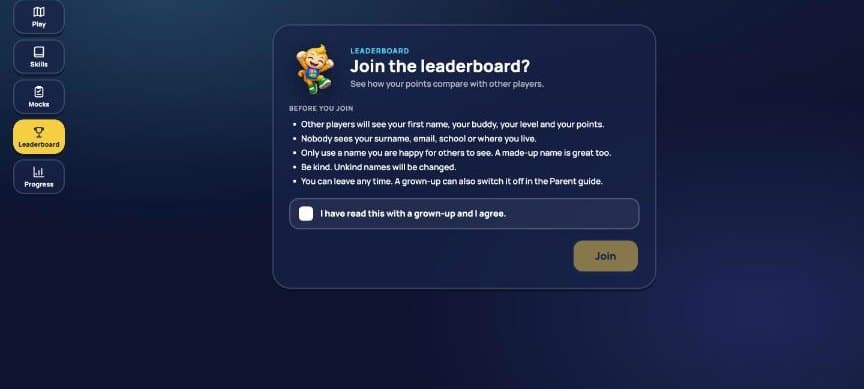
What you see
You get the plain version
Your child gets the adventure. You get a straight list of what they have actually mastered — and what they have not.
Parent guide
Year 4What your child has mastered
- Number & place valueMastered
- Addition & subtraction9 of 12 skills
- FractionsNeeds practice
- Shape & spaceNot started
This week: 38 questions, 4 skills mastered, a 6-day streak.
Emailed every two weeks
Illustrative example of the parent view.
How the learning works
Not a worksheet with a scoreboard
Most 11+ apps hand a child the same questions as everyone else and tell them their score. This one works out what your child can already do, then spends their time on what they cannot.
It starts by finding the gaps
A one-off starting check of 50 questions across the skills open to your child's school year. Every answer is marked as they go, with a short explanation when they get one wrong — so it teaches while it measures.
Then it adapts, skill by skill
Each topic is a climb through its skills in order, one question at a time. Right answers move your child up a level; a wrong one drops back a rung and offers a clue. A skill counts as mastered only at the top level, twice in a row.
Nothing wrong is quietly forgotten
Every question your child gets wrong — in practice, in the starting check, in a paper — comes back on a list to put right. Answer it correctly anywhere and it comes off.
Each topic ends with a real check
A final assessment on every skill in the topic, two questions each at the hardest level, and a certificate when it closes. No pass mark to fear — it shows what is mastered and what needs another look.
How it works
Three steps, then a habit
Your child sits the starting check
Fifty questions, no revision needed. You see a friendly score; we see which skills to open first.
They practise a few times a week
A daily goal sized to the skills still left — ten minutes at a time is enough. Points, streaks and a world to travel through keep them coming back.
You watch the picture fill in
Open the parent guide any time to see every topic and skill, and whether it is mastered, passed or still needs practice.
What's inside
Built on a real curriculum, not a question dump
Our curriculum team mapped 11+ maths into individual skills, and every question in the platform is attached to one of them. That is what lets it say “mastered” and mean it.
A full 11+ maths curriculum
19 topics broken into 332 individual skills by our curriculum team — the smallest useful unit, so progress is honest rather than approximate.
Content that opens with the school year
A Year 3 child meets Year 3 skills; Year 4 adds Year 4; Year 5 sees all of it. Later years are shown but locked, so nobody is asked something they have not been taught.
Timed practice papers
Your child sets up a paper in a click — 20, 40 or 60 minutes, the topics they choose, easy to hard. It behaves like the real thing: no marks until it is handed in, questions to flag and come back to, a countdown that hands it in for them.
A weekly leaderboard, if you want one
Children of the same school year, grouped into tiers. It is off until a grown-up turns it on, and shows first names, levels and points only.
Streaks that forgive a missed day
Meeting the daily goal opens a chest, which can hold a shield that covers one missed day. The aim is a habit, not a punishment.
Certificates worth keeping
Finish a topic and your child has a certificate to print, and you get an email saying what they managed.
For parents
You see everything, your child sees a game
The fun belongs on your child's screen. The evidence belongs on yours.
Every skill, marked plainly
The parent guide lists each topic and each skill inside it as mastered, passed, needs practice or not assessed yet — plus the week at a glance.
A progress report every two weeks
What your child practised, what they mastered and what to nudge — sent to your email, not buried in an app.
Reminders, never nagging
One reminder on the day a streak would break, and nothing if your child has already practised. If they stopped a fortnight ago, we leave them be.
Nothing is sold to your child
No prices and no upgrade prompts on a child's screen. Plans, payment and the leaderboard switch all sit behind the parent side.
Where we are right now
Being tested with a small group of families
The 11+ Maths course is built and playing; our 11+ Vocabulary course is written and in review. We would rather open slowly, with families we can look after properly, than launch loudly. Put your name down and you will be among the first invited — and the first to hear the price.
Parent questions
Frequently asked
Children in Year 3, Year 4 and Year 5 — the years when 11+ preparation is actually built. Each child only meets the skills taught up to their own school year, and more opens up each August.
Early access list
Be first in when places open
Tell us who it is for and we will email you as soon as we can let your child in — plus the price, before it goes public.