Age 16–17 · Sixth Form · Year 12 · England
Year 12 British Curriculum — Complete Guide.
Everything students and parents need to know about Year 12 in the UK — A Level subjects, UCAS preparation, assessments, university entry, and how Eleven Ace provides expert online tuition for every A Level subject.


Trusted by 500+ families across the UK, UAE & India
Free demo class
Meet the tutor before you decide
500+
Happy students
20+
Subjects covered
Y1–13
Every year group
3
Countries

Popular A Levels
Year 12 A Level Subjects — Core Categories
A Level subjects fall into three broad categories. Eleven Ace provides expert 1:1 and batch tuition across all of them, tailored to your exam board.
STEM A Levels
- Biology — cells, organisms, genetics, ecology, practical endorsement
- Chemistry — organic, inorganic, physical chemistry, practicals
- Physics — mechanics, electricity, waves, particles, practicals
- Mathematics — pure maths, statistics, mechanics
- Further Mathematics — complex numbers, matrices, differential equations
Essay-Based A Levels
- English Literature — set texts, poetry, literary analysis, coursework
- History — source analysis, extended essays, period studies
- Geography — physical and human geography, fieldwork, NEA
- Psychology — research methods, approaches, biopsychology
- Sociology — culture, education, research methods, theory
- Economics — micro and macroeconomics, data response
- Politics — UK politics, political ideologies, global politics
Applied A Levels
- Art & Design — portfolio development, personal investigation
- Music — performance, composition, analysis, listening
- Computer Science — programming, algorithms, data structures
- Business Studies — marketing, finance, operations, strategy
- Media Studies — media language, representation, industries
- Design & Technology — product design, iterative design process
Subject Combinations
A Level Subject Options — Popular Combinations
Choosing the right A Level combination is critical for university entry. Here are nine popular routes students take in Year 12, each aligned to specific career paths.
Biology + Chemistry + Maths
Essential for medical school entry. Chemistry is required by almost all UK medical schools. UCAT/BMAT preparation also begins in Year 12.
Maths + Further Maths + Physics
The standard combination for engineering degrees. Further Maths is strongly recommended for top universities like Cambridge and Imperial.
History + English Lit + Politics
Law schools value strong essay-writing and analytical skills. No specific A Levels are required, but these subjects develop the right competencies. LNAT preparation begins in Year 12.
Maths + Economics + Business
Strong for degrees in economics, finance, accounting and management. Maths is essential for top economics programmes.
Art + English Lit + History
Ideal for creative degrees, art foundation courses, English degrees and humanities programmes. Portfolio work begins early in Year 12.
Maths + Computer Science + Physics
Essential for computing and software engineering degrees. Maths is required; Further Maths is advantageous for Cambridge and Oxford.
Subject Specialism + English + Psychology
Choose A Levels in the subject you want to teach. English and Maths GCSEs at grade 4+ are mandatory for all teacher training routes.
Psychology + Biology + Maths
Psychology A Level is not always required for the degree, but Biology and Maths strengthen applications. Research methods knowledge is valued.
Planning Ahead in Year 12
Students considering a gap year should still apply through UCAS in Year 13 and request deferred entry. Year 12 is the time to research gap year programmes and discuss plans with tutors.
Eleven Ace Tuition
Expert Online Tuition for Every A Level Subject
Whether your child needs help with A Level content, exam technique, or UCAS preparation — Eleven Ace offers two flexible options with exam board-specific teaching across AQA, Edexcel, OCR and WJEC.
1:1 Personalised A Level Tuition
- Dedicated A Level tutor matched to your subject and exam board (AQA, Edexcel, OCR, WJEC)
- All A Level subjects — Sciences, Maths, Humanities, Languages and more
- Exam board-specific teaching — past papers, mark schemes and examiner insights
- Flexible scheduling — evenings, weekends and school holidays
- Diagnostic assessment to identify knowledge gaps from Day 1
- UCAS support — personal statement guidance and predicted grade strategy
- Regular progress reports shared with parents and students
4-Student Batch A Level Tuition
- Maximum 4 students per batch — every student gets individual attention
- Collaborative learning with peer discussion and healthy academic challenge
- More affordable than 1:1 while maintaining high-quality A Level teaching
- Grouped by subject and exam board for focused, relevant sessions
- All A Level subjects covered — Sciences, Maths, Humanities and more
- Weekly homework and past paper practice included in every batch
- Same expert tutors as 1:1 — just a different learning format
Excel at A Levels with Expert Year 12 Tuition.
1:1 tuition · 4-student batches · All A Level subjects · UCAS prep · Across the UK
Book Free Year 12 Demo ClassAssessments
Assessments & Tests in Year 12
Year 12 has no statutory national tests — but internal assessments are critical for predicting A Level grades. Schools use these results for UCAS predicted grades, which universities rely on for conditional offers.
How Eleven Ace Helps
Our A Level tutors prepare students for internal school exams, end-of-year assessments and mock exams using exam board-specific past papers and mark schemes. Strong Year 12 results lead to higher predicted grades — which directly affect university offers.
What Year 12 Has
- Internal school exams — typically at Christmas and end of year, used for predicted grades
- End-of-year assessments — covering all Year 12 content, often in A Level exam format
- Mock exams — full A Level-style papers under timed conditions
- EPQ deadlines — if undertaking the Extended Project Qualification (worth half an A Level)
- Practical endorsements — required for Science A Levels (Biology, Chemistry, Physics)
What Year 12 Does NOT Have
- No statutory national tests — no government-set exams in Year 12
- No final A Level exams — all A Level exams are sat in Year 13 (May/June)
- AS Levels are optional — most schools no longer enter students for standalone AS exams
Subject Detail
Popular A Level Subjects — What Year 12 Covers
A detailed look at the three most popular A Level subject areas and exactly what students study during Year 12. Eleven Ace tutors work through each topic systematically.
Pure, Statistics & Mechanics
- Pure Maths — proof, algebra, coordinate geometry, sequences, trigonometry, exponentials, logarithms, differentiation, integration
- Statistics — data collection, probability, statistical distributions, hypothesis testing
- Mechanics — kinematics, forces, Newton's laws, moments
- Use of technology — large data sets, graphing calculators
- Problem solving and mathematical modelling throughout
Practicals & Exam Papers
- Biology — biological molecules, cells, organisms exchange, genetic information
- Chemistry — atomic structure, bonding, energetics, kinetics, equilibria, organic
- Physics — measurements, particles, waves, mechanics, materials, electricity
- Required practicals — minimum 12 per subject for practical endorsement
- Data analysis, graph skills and extended writing in all three sciences
Set Texts & Coursework
- Study of prose, poetry and drama from different periods and genres
- Close reading and critical analysis of set texts
- Comparative and contextual essay writing
- Coursework / NEA — independent critical study (typically started in Year 12)
- Literary theory, critical perspectives and wider reading
UCAS & University
UCAS & University Preparation — Starting in Year 12
Year 12 is when university preparation truly begins. From researching courses to drafting personal statements, everything you do in Year 12 feeds directly into your UCAS application submitted in Year 13.
- UCAS application submitted in Year 13 (October for Oxbridge/medicine, January for most courses)
- Up to 5 university choices — students can apply to 5 courses in one application
- Personal statement — 4,000 characters explaining your motivation and suitability
- Predicted grades — based on Year 12 performance and teacher judgement
- Reference — written by a teacher or tutor who knows your academic work
- Conditional offers — universities offer places based on predicted grades, confirmed after A Level results
Autumn Term (Sept–Dec)
Research universities and courses. Attend open days. Begin super-curricular activities (reading, competitions, volunteering).
Spring Term (Jan–Mar)
Begin personal statement drafts. Arrange work experience. Start EPQ if applicable. Focus on Year 12 exams for strong predicted grades.
Summer Term (Apr–Jul)
Finalise university shortlist. Attend more open days. Complete work experience. Revise personal statement. Prepare for Year 12 end-of-year exams.
Summer Holidays (Jul–Aug)
Polish personal statement. Complete wider reading. Prepare for admissions tests (UCAT, BMAT, LNAT, MAT, STEP). Begin Year 13 content early.
Super-Curricular Activities
Top universities expect more than just grades. Reading beyond the syllabus, attending lectures, entering competitions (Olympiads, essay prizes), volunteering and relevant work experience all strengthen a personal statement. Year 12 is when this groundwork is laid.
Open Days
Most universities hold open days between June and October. Year 12 students should aim to visit at least 3–5 universities to compare campuses, courses and student life. Virtual open days are also available for those who cannot travel.
Typical University Entry Requirements
Understanding entry requirements in Year 12 helps students set realistic targets and choose the right universities.
| University Type | Typical A Level Offer | GCSE Requirements | Additional Tests |
|---|---|---|---|
| Oxford / Cambridge | A*A*A to A*AA | Mostly 7–9 (A–A*) | MAT, STEP, PAT, HAT, admissions interviews |
| Russell Group (top tier) | A*AA to AAA | Mostly 7+ in core subjects | UCAT, BMAT, LNAT for specific courses |
| Russell Group (mid tier) | AAA to AAB | Grade 5+ in English and Maths | Varies by course |
| Other universities | AAB to BBC | Grade 4+ in English and Maths | Rarely required |
| Foundation year entry | BCC to CDD | Grade 4+ in English and Maths | None typically |
Choosing A Levels
How to Choose A Level Subjects
Choosing the right A Levels is one of the most important decisions a student makes. The wrong combination can close doors to certain university courses. Here is what every Year 12 student and parent should consider.
Always check university entry requirements before finalising A Level choices. Some courses have mandatory subjects — for example, Medicine requires Chemistry, Engineering requires Maths and Physics. Use UCAS search to verify requirements for your target courses.
The Russell Group identified "facilitating subjects" that keep the widest range of degree courses open: Maths, Further Maths, English Literature, Physics, Biology, Chemistry, Geography, History, Languages. Choosing at least two facilitating subjects is recommended.
A Level Combinations & Career Pathways
Common subject combinations mapped to university courses and careers.
| Career / Degree | Required A Levels | Recommended A Levels | Facilitating? |
|---|---|---|---|
| Medicine | Chemistry + Biology | Maths, Physics | Yes (all) |
| Engineering | Maths + Physics | Further Maths, Chemistry | Yes (all) |
| Law | None specific | History, English Lit, Politics | Yes (most) |
| Economics | Maths | Economics, Further Maths | Yes |
| Computer Science | Maths | Further Maths, Physics, CS | Mostly |
| Architecture | Art or DT (usually) | Maths, Physics | Mixed |
| Psychology | None specific | Psychology, Biology, Maths | Mixed |
| English / Humanities | English Lit (usually) | History, Languages, Philosophy | Yes (most) |
Parent Guide
What to Do in Year 12
A term-by-term action plan for parents supporting their child through Year 12. Follow this timeline to stay ahead of every key milestone.
- Support the transition to sixth form — the jump from GCSE to A Level is significant; adjust expectations early
- Monitor subject choices — most schools allow subject changes in the first 2–4 weeks; act quickly if needed
- Establish a study routine — A Levels require significant independent study (4–5 hours per subject per week outside lessons)
- Encourage university research — attend open days together, discuss career interests openly
- Book a free demo with Eleven Ace — start A Level tuition early to build strong foundations
- Review end-of-year exam performance — these results directly influence predicted grades for UCAS
- Encourage UCAS research — help shortlist universities, compare courses and entry requirements
- Support work experience — help arrange placements in fields related to their target degree
- Discuss personal statement — encourage early drafting; read examples together
- Review progress with your Eleven Ace tutor — adjust focus based on exam results and predicted grade targets
Why Year 12 Parents Choose Eleven Ace
- All A Level subjects in one place — no juggling multiple tutors or platforms
- Exam board-specific expertise — AQA, Edexcel, OCR, WJEC specialists
- Flexible 1:1 or batch options — choose what works for your family
- UCAS and personal statement support — guidance beyond just subject tuition
- UK-wide coverage — expert A Level tutors available wherever you are
- Free demo class — try before you commit, no obligation
FAQ
Frequently Asked Questions — Year 12
Everything students and parents ask about Year 12 in the British curriculum, answered clearly.
Most students take 3 A Levels. Some take 4 at the start of Year 12 and drop to 3 later. Universities typically make offers based on 3 A Level grades. Taking 4 is only advisable if you are genuinely strong across all four subjects — quality of grades matters far more than quantity.
Wellbeing
Student Wellbeing — Managing Year 12 Pressure
Year 12 brings new independence but also a significant step up in workload and expectations. Supporting student wellbeing is essential for sustained academic success.
The jump from GCSE to A Level is the biggest academic leap in the British education system. Students go from studying 8–10 subjects to 3–4, but the depth and independent study expected increases dramatically. Many students struggle to adjust to managing their own time without the structured timetable of secondary school.
Year 12 is the first time many students are asked to make decisions that shape their future career. Choosing A Levels, researching universities and writing personal statements can feel overwhelming. Remind students that most people change careers multiple times — these decisions are important but not irreversible.
Sixth form often brings new social dynamics — new friendships, different peer groups, and sometimes a new school or college environment entirely. Students may also face pressure around driving lessons, social media, and relationships. Maintaining a support network is important.
Many Year 12 students take on part-time jobs. While valuable for developing responsibility and earning money, working too many hours can impact academic performance. Experts recommend no more than 10–12 hours per week during term time to maintain a healthy balance.
Book Free Year 12 Demo Class.
1:1 Tuition · 4-Student Batches · All A Level Subjects · UCAS Preparation · Across the UK
Maths · Biology · Chemistry · Physics · English · History · Economics · Psychology · Computer Science
Book Free Year 12 Demo ClassWho teaches it
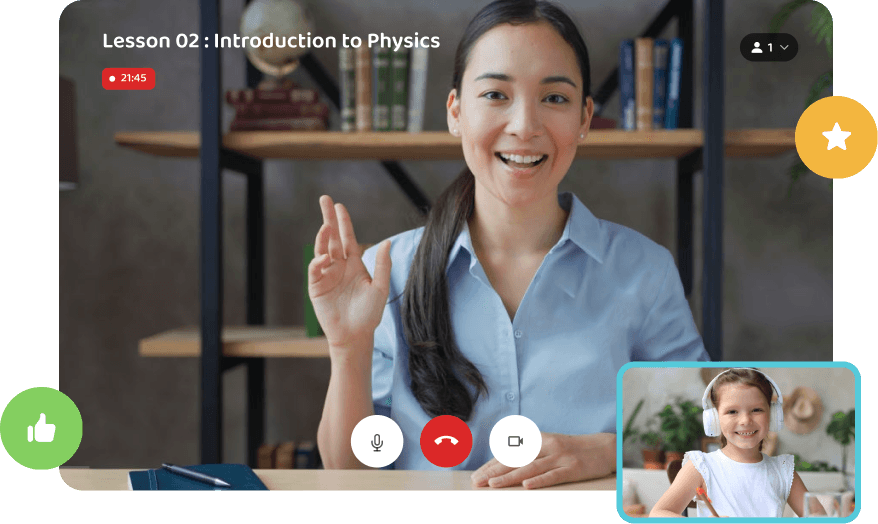
Real tutors, teaching live — never pre-recorded.
Every Year 12 session is with a named subject specialist, matched to your child on year group, current ability and the goals you set. Sit a free demo lesson before you decide.